

Role of Panchayati Raj Institutions in
Rural Development in India
Introduction
Rural development in India is deeply connected to the effectiveness of local governance systems. While national and state-level policies provide direction, it is at the grassroots level where implementation truly takes shape.
Panchayati Raj Institutions, commonly known as PRIs, form the backbone of decentralized governance in rural India. These institutions play a critical role in planning, implementing, and monitoring development programmes, ensuring that benefits reach communities in a timely and effective manner.
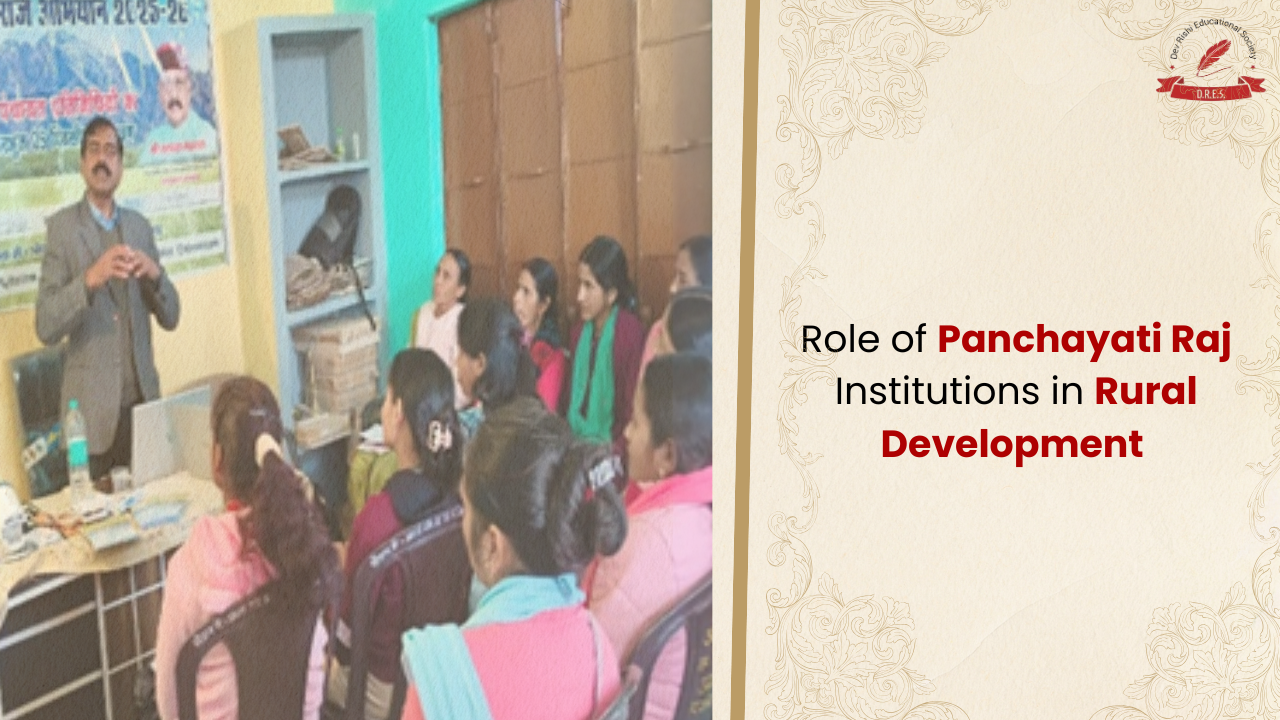
Understanding Panchayati Raj Institutions
Panchayati Raj Institutions are local self-government bodies established to promote decentralized governance. They operate at three levels:
Gram Panchayat at the village level
Panchayat Samiti at the block level
Zila Parishad at the district level
This three-tier system allows decision-making to take place closer to the people, making governance more responsive and inclusive.
Importance of Decentralized Governance
Decentralization ensures that local communities have a voice in development planning. Instead of relying solely on centralized decisions, PRIs enable communities to identify their own needs and priorities.
This leads to:
Better targeting of development initiatives
Increased transparency and accountability
Greater community participation
Improved implementation of schemes
When governance is localized, solutions become more practical and relevant.
Key Roles of PRIs in Rural Development
Panchayati Raj Institutions are involved in multiple aspects of rural development.
1. Planning and Implementation of Schemes: PRIs play a central role in implementing government programmes related to livelihoods, infrastructure, health, education, and sanitation.
2. Resource Management: They manage local resources such as water, land, and community assets, ensuring sustainable utilization.
3. Service Delivery: PRIs facilitate delivery of essential services including drinking water, sanitation, roads, and welfare schemes.
4. Community Mobilization: They engage communities in development activities, encouraging participation and ownership.
Role in Strengthening Livelihoods
PRIs contribute to livelihood promotion by supporting skill development initiatives, facilitating employment schemes, and enabling local enterprise development. Through coordination with various departments and institutions, they help create opportunities for income generation within rural areas.
Importance of Capacity Building
The effectiveness of Panchayati Raj Institutions depends largely on the capacity of their members. Many representatives may lack formal training in governance, planning, and administration.Capacity building initiatives help by:
🔥 Enhancing knowledge of policies and schemes
🔥 Improving planning and decision-making skills
🔥 Strengthening administrative capabilities
🔥 Promoting transparency and accountability
Well-trained PRI members are better equipped to drive development outcomes.
Role in Participatory Planning
Participatory planning is a key feature of decentralized governance. PRIs involve community members in identifying needs and setting priorities. This ensures that:
☑ Development plans reflect ground realities
☑ Resources are used efficiently
☑ Community ownership is strengthened
☑ Participatory approaches lead to more sustainable outcomes.
Challenges Faced by PRIs
Despite their importance, Panchayati Raj Institutions face several challenges:
◍ Limited technical and administrative capacity
◍ Inadequate financial resources
◍ Lack of awareness about schemes
◍ Weak coordination between departments
◍ Variations in governance quality across regions
Addressing these challenges is essential to strengthen rural governance systems.
Strengthening PRIs for Better Outcomes
Improving the effectiveness of PRIs requires a multi-dimensional approach:
☄ Continuous training and capacity building
☄ Strengthening financial autonomy
☄ Enhancing transparency through digital tools
☄ Promoting community participation
☄ Building stronger institutional linkages
These measures help PRIs function more effectively and deliver better results.
Impact on Rural Development
When Panchayati Raj Institutions function efficiently, the impact is significant:
💡 Improved service delivery
💡 Better infrastructure development
💡 Enhanced livelihood opportunities
💡 Increased community participation
Strong local governance creates a foundation for inclusive and sustainable development.
The Way Forward
As India continues to focus on rural development, strengthening Panchayati Raj Institutions will remain a priority. Integrating governance with other sectors such as livelihoods, health, and education can create a more holistic development approach. Investing in local governance is essentially an investment in long-term development.
Conclusion
Panchayati Raj Institutions play a vital role in shaping rural development by bringing governance closer to the people. Their ability to plan, implement, and monitor programmes at the grassroots level makes them indispensable to the development ecosystem.
Field-level experiences increasingly demonstrate that when PRIs are supported through structured training and institutional strengthening, their effectiveness improves significantly.
Work carried out in collaboration with organizations such as Dev Rishi Educational Society (DRES) reflects how capacity-building efforts can enhance governance systems and lead to more impactful development outcomes.
What is GPDP Planning and Why It Matters for Local Governance in India
Introduction
Effective rural development depends not only on schemes and funding but also on how well these resources are planned and utilized at the grassroots level. In India, one of the most important tools for decentralized planning is the Gram Panchayat Development Plan (GPDP).
GPDP is designed to empower local governments to create structured, need-based development plans that reflect the priorities of the community. It plays a crucial role in strengthening governance systems and ensuring that development initiatives are both inclusive and sustainable.
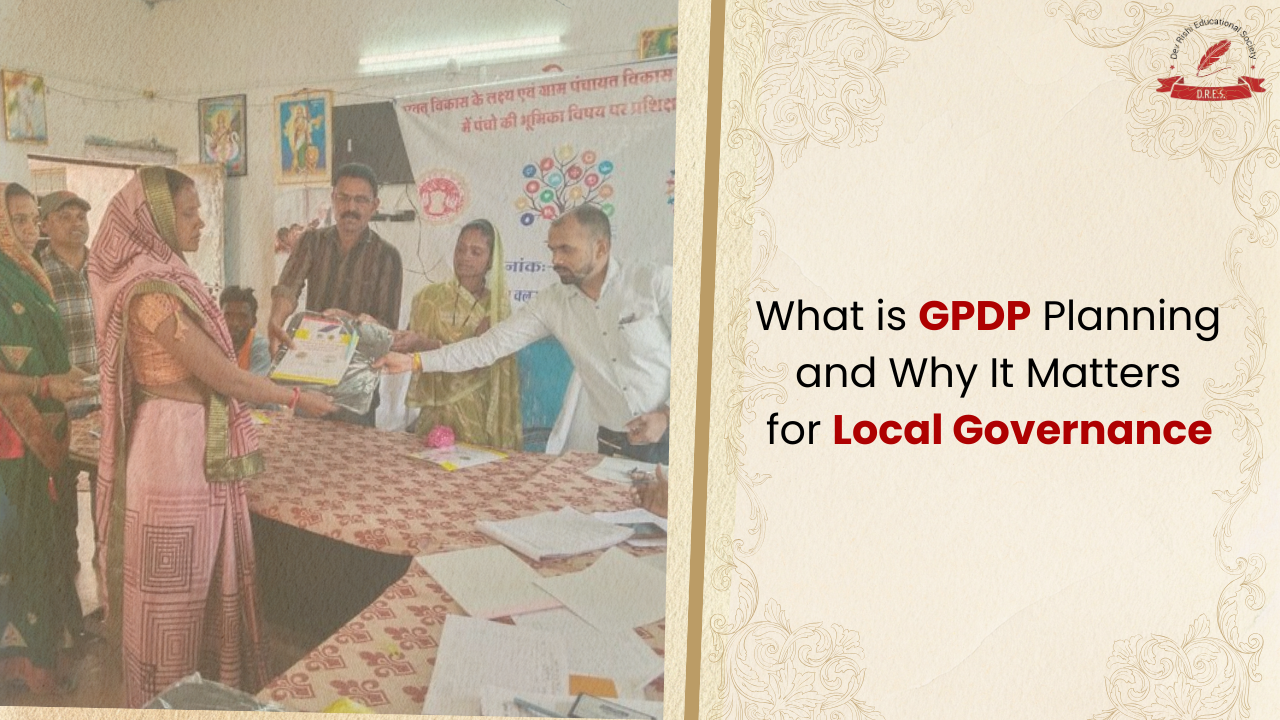
What is GPDP Planning?
Gram Panchayat Development Plan, commonly known as GPDP, is an annual planning process undertaken by Gram Panchayats. It involves identifying local needs, prioritizing development activities, and allocating resources accordingly.The key objective of GPDP is to ensure that planning is:
✦ Participatory
✦ Transparent
✦ Evidence-based
✦ Aligned with local needs
It enables villages to move from generic planning to targeted and structured development.
Key Components of GPDP
GPDP planning includes several important steps:
1. Situation Analysis
Understanding the current status of the village in terms of infrastructure, livelihoods, health, education, and sanitation.
2. Needs Assessment
Identifying gaps and priorities based on community input and available data.
3. Resource Mapping
Assessing available financial, human, and natural resources.
4. Plan Formulation
Preparing a structured plan with clear objectives and activities.
5. Implementation and Monitoring
Ensuring that planned activities are executed effectively and tracked regularly.
Importance of Participatory Planning
One of the defining features of GPDP is community participation. Gram Sabhas play a central role in identifying needs and approving plans.This ensures that:
◎ Plans reflect real community priorities
◎ Transparency is maintained
◎ Accountability is strengthened
◎ Local ownership is created
Participatory planning leads to better acceptance and sustainability of development initiatives.
Why GPDP Matters for Local Governance
GPDP strengthens local governance in several ways:
1. Decentralized Decision-Making: It allows decisions to be made at the village level, making governance more responsive.
2. Better Resource Utilization: Resources are allocated based on actual needs, reducing wastage.
3. Improved Coordination: Different schemes and departments can be aligned under a single plan.
4. Enhanced Accountability: Clear planning and monitoring systems improve transparency.
Integration with Government Schemes
GPDP acts as a convergence platform for various government programmes. It ensures that schemes related to:
➥ Livelihoods
➥ Water and sanitation
➥ Health
➥ Infrastructure
are implemented in a coordinated manner. This integration improves efficiency and maximizes impact.
Challenges in GPDP Implementation
Despite its importance, GPDP implementation faces several challenges:
╬ Limited technical knowledge at the local level
╬ Inadequate data for planning
╬ Low participation in Gram Sabha meetings
╬ Delays in plan preparation and execution
Addressing these challenges is essential to fully realize the potential of GPDP.
Role of Capacity Building
Capacity building is critical for effective GPDP planning. Training programmes help Panchayat members and local stakeholders understand:
⟦ Planning methodologies
⟦ Data usage and analysis
⟦ Financial management
⟦ Monitoring and evaluation
With proper training, local institutions can prepare more effective and realistic plans.
Use of Data in GPDP
Data-driven planning improves the quality of GPDP. Using baseline data, surveys, and local records helps in:
Identifying real gaps
Setting measurable targets
Tracking progress
Evidence-based planning leads to better outcomes.
Impact of Effective GPDP Planning
When GPDP is implemented effectively, the benefits are significant:
⇲ Improved infrastructure development
⇲ Better service delivery
⇲ Enhanced livelihood opportunities
⇲ Stronger governance systems
It transforms planning from a routine exercise into a strategic development tool.
The Way Forward
To strengthen GPDP implementation, it is important to:
* Increase awareness about its importance
* Improve training and technical support
* Encourage active community participation
* Strengthen monitoring systems
* Promote digital tools for planning
These steps can make GPDP more effective and impactful.
Conclusion
GPDP planning is a powerful tool for strengthening local governance and ensuring that development initiatives are aligned with community needs. By promoting participatory and data-driven planning, it enhances transparency, accountability, and efficiency. Field-level experiences continue to highlight that structured guidance and capacity-building support significantly improve GPDP outcomes.
Efforts facilitated by organizations such as Dev Rishi Educational Society (DRES) reflect how strengthening planning processes at the grassroots level can lead to more effective governance and sustainable development.
How Capacity Building Strengthens Governance Systems in India
Introduction
Strong governance systems are essential for effective development. Policies, schemes, and resources can only create impact when institutions have the ability to implement them efficiently.
In India, especially at the grassroots level, governance structures often face challenges related to skills, knowledge, and operational capacity. This is where capacity building becomes critical.
By strengthening the abilities of individuals and institutions, capacity building ensures that governance systems function effectively, transparently, and sustainably.
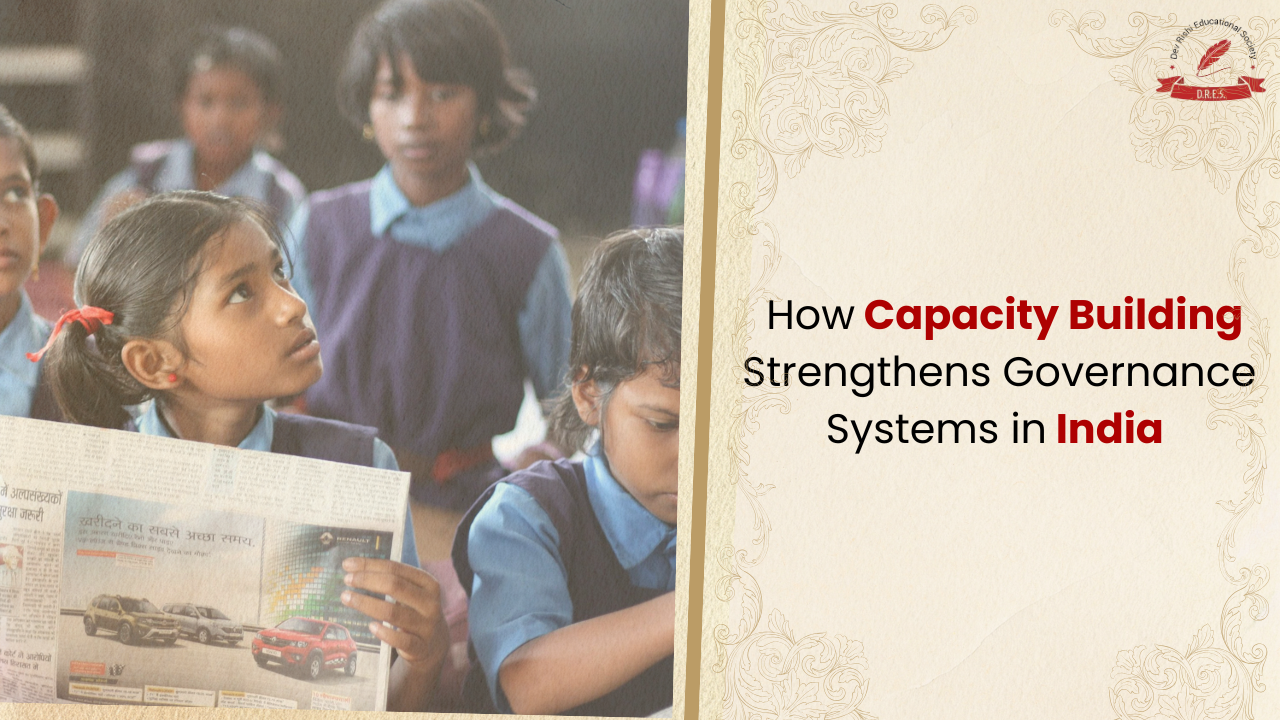
What is Capacity Building in Governance?
Capacity building refers to the process of enhancing the skills, knowledge, and competencies of individuals and institutions to perform their roles effectively.
➤ In the context of governance, it includes:
▸ Training of government officials and local representatives
▸ Strengthening administrative systems
▸ Improving planning and implementation capabilities
▸ Enhancing monitoring and reporting mechanisms
It is not a one-time activity but a continuous process aimed at long-term improvement.
Why Capacity Building is Important
Governance systems involve multiple responsibilities, from planning and decision-making to implementation and monitoring. Without proper capacity, even well-designed programmes may fail to deliver results.
Capacity building helps in:
➤ Improving efficiency in service delivery
➤ Strengthening decision-making processes
➤ Enhancing accountability and transparency
➤ Ensuring better utilization of resources
It creates a foundation for effective governance.
Key Areas of Capacity Building
➤ 1. Administrative Skills
- Training officials in documentation, reporting, and operational processes improves efficiency.
➤ 2. Planning and Decision-Making
- Capacity building enhances the ability to design and execute development plans effectively.
➤ 3. Financial Management
- Understanding budgeting, fund utilization, and financial reporting ensures proper use of resources.
➤ 4. Technical Knowledge
- Exposure to sector-specific knowledge such as sanitation, livelihoods, or infrastructure improves implementation quality.
➤ 5. Digital Literacy
- With increasing use of digital tools, capacity building in technology becomes essential for modern governance.
Role of Capacity Building in Local Governance
At the grassroots level, institutions such as Panchayati Raj bodies require continuous support to function effectively.
Capacity building helps local governance systems to:
➥ Prepare better development plans
➥ Implement schemes efficiently
➥ Engage communities effectively
➥ Monitor progress and outcomes
It empowers local leaders to take informed decisions.
Impact on Service Delivery
When governance systems are strengthened through capacity building, the quality of service delivery improves significantly.
This includes:
➤ Faster implementation of schemes
➤ Reduced delays and errors
➤ Better coordination among departments
➤ Improved beneficiary satisfaction
Efficient systems lead to better outcomes for communities.
Challenges in Capacity Building
Despite its importance, several challenges exist:
➤ Limited access to training in remote areas
➤ Lack of continuous learning opportunities
➤ Variations in training quality
➤ Resistance to adopting new practices
Addressing these challenges requires structured and sustained efforts.
Importance of Continuous Learning
Capacity building is not a one-time intervention. Governance systems evolve, and so must the skills of those managing them.
Continuous learning ensures that:
➤ Individuals stay updated with policies and practices
➤ Institutions adapt to changing requirements
➤ Systems remain efficient and relevant
➤ Ongoing training and refresher programmes are essential.
Role of Institutions and Partnerships
Capacity building requires collaboration between government bodies, training institutions, and development organizations.
These partnerships help in:
➤ Designing structured training modules
➤ Delivering field-level training
➤ Providing technical support
➤ Monitoring capacity development outcomes
Collaborative efforts strengthen the overall governance ecosystem.
Long-Term Impact of Capacity Building
➤ When effectively implemented, it leads to:
★ Stronger institutions
★ Better governance systems
★ Improved development outcomes
★ Increased public trust
It creates a sustainable framework for long-term growth.
The Way Forward
To enhance the impact of capacity building:
➤ Expand training programmes across regions
➤ Use technology for wider reach
➤ Standardize training content
➤ Strengthen monitoring and evaluation
➤ Encourage knowledge sharing
These steps can help build resilient governance systems.
Conclusion
Capacity building is a fundamental component of effective governance. By strengthening the abilities of individuals and institutions, it ensures that development initiatives are implemented efficiently and sustainably.
Field experiences consistently demonstrate that structured training and institutional support significantly improve governance outcomes.
Efforts with organizations such as Dev Rishi Educational Society (DRES) reflect how focused capacity-building initiatives enhance administrative efficiency and contribute to long-term development impact.
Challenges in Decentralized Governance
in India (And Practical Solutions)
Introduction
Decentralized governance has been a cornerstone of India’s development strategy, aiming to bring decision-making closer to the people. Through systems like Panchayati Raj Institutions, local bodies are empowered to plan and implement development initiatives based on community needs.
However, while the framework for decentralized governance is well established, its effectiveness varies across regions. Several challenges continue to affect the efficiency and impact of local governance systems.
Understanding these challenges and identifying practical solutions is essential for strengthening governance at the grassroots level.
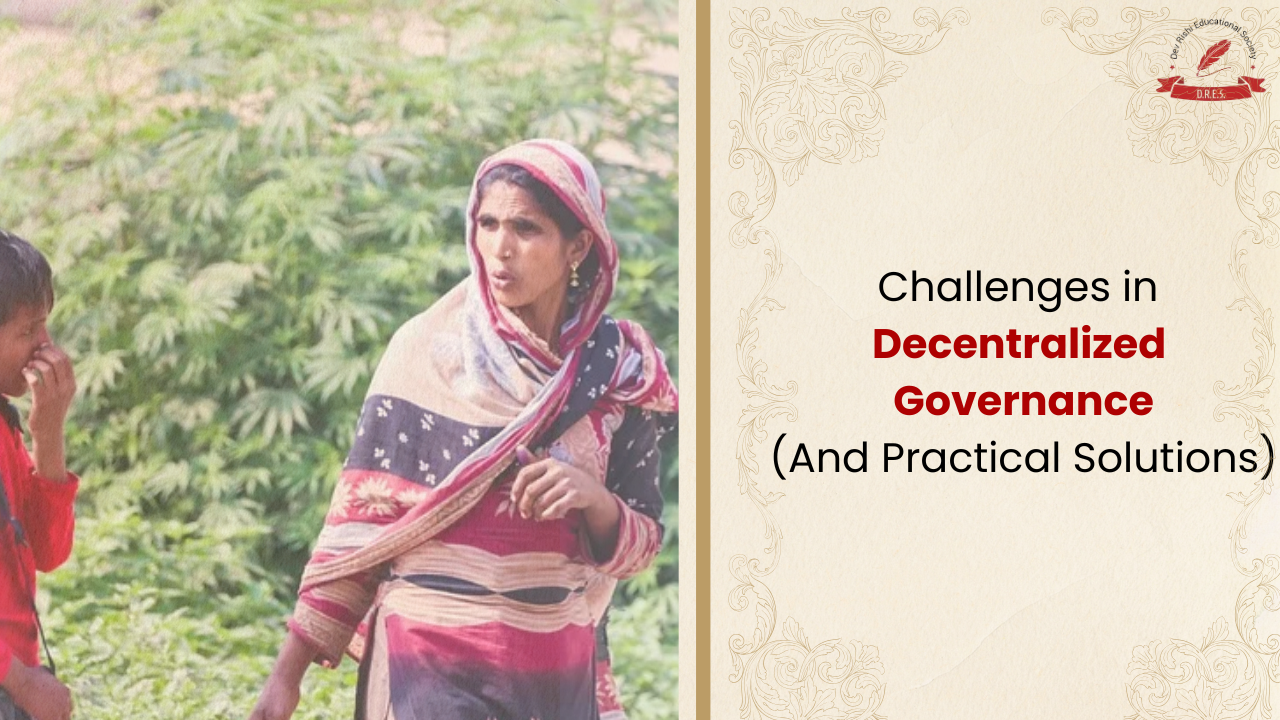
What is Decentralized Governance?
Decentralized governance refers to the distribution of decision-making authority from central and state governments to local institutions.It allows local bodies to:
✺ Plan development activities
✺ Allocate resources
✺ Implement schemes
✺ Engage communities
This approach ensures that governance is more responsive, inclusive, and context-specific.
Key Challenges in Decentralized Governance
1. Limited Institutional Capacity: Many local bodies lack the technical and administrative skills required to effectively plan and implement development programmes.
⟐ Solution: Regular capacity-building initiatives and structured training programmes can enhance the capabilities of local institutions.
2. Inadequate Financial Resources: Local governance bodies often face constraints in accessing sufficient funds or managing available resources efficiently.
⬢ Solution: Strengthening financial planning, improving fund allocation mechanisms, and enhancing transparency in utilization can address this issue.
3. Weak Coordination Between Departments: Lack of coordination between various government departments can lead to duplication of efforts or gaps in implementation.
⟡ Solution: Integrated planning and convergence of schemes can improve coordination and efficiency.
4. Limited Community Participation: In some areas, community involvement in decision-making processes remains low, affecting the relevance and sustainability of development initiatives.
◈ Solution: Promoting participatory planning through Gram Sabhas and awareness campaigns can increase engagement.
5. Lack of Data-Driven Planning: Decisions are sometimes made without adequate data, leading to ineffective planning and resource allocation.
⬥ Solution: Encouraging data collection, baseline surveys, and evidence-based planning can improve outcomes.
6. Variations in Governance Quality: The effectiveness of decentralized governance varies significantly across regions due to differences in capacity, resources, and leadership.
⧉ Solution: Standardizing processes and providing targeted support to weaker regions can help reduce disparities.
Importance of Strengthening Local Institutions
Strong local institutions are essential for effective decentralized governance. When institutions are capable and well-supported, they can:⦿ Deliver services efficiently
⦿ Respond to local needs
⦿ Ensure transparency and accountability
⦿ Promote inclusive development
Institutional strength directly influences governance outcomes.
Role of Technology in Improving Governance
Digital tools are increasingly being used to strengthen governance systems. They help in:⌘ Monitoring programme implementation
⌘ Improving transparency
⌘ Streamlining administrative processes
⌘ Enhancing communication between stakeholders
Technology can significantly improve efficiency and accountability.
Importance of Continuous Monitoring and Evaluation
Monitoring and evaluation play a critical role in identifying gaps and improving performance.
Effective systems ensure:
⟲ Timely tracking of progress
⟲ Identification of challenges
⟲ Data-driven decision-making
⟲ Improved accountability
Regular evaluation helps in refining governance processes.
Impact of Addressing These Challenges
When the challenges of decentralized governance are effectively addressed, the benefits are substantial:✸ Better service delivery
✸ Improved infrastructure development
✸ Increased community participation
✸ Enhanced livelihood opportunities
Strong governance systems create a foundation for sustainable development.
The Way Forward
To strengthen decentralized governance in India, it is important to:
⧗ Invest in capacity building
⧗ Improve financial management systems
⧗ Promote participatory planning
⧗ Encourage use of data and technology
⧗ Strengthen institutional frameworks
A comprehensive approach is required to ensure long-term success.
Conclusion
Decentralized governance has the potential to transform rural development by making systems more responsive and inclusive. However, realizing this potential requires addressing key challenges related to capacity, resources, and coordination.
Field-level experiences consistently indicate that when local institutions are supported through structured interventions and continuous guidance, governance outcomes improve significantly.
Initiatives undertaken in collaboration with organizations such as Dev Rishi Educational Society (DRES) reflect how strengthening institutional capacity and planning processes can enhance the effectiveness of decentralized governance systems.
Why Institutional Strengthening is Key to Sustainable Development in India
Introduction
Sustainable development is often discussed in terms of infrastructure, funding, and large-scale programmes. However, one of the most critical and often overlooked factors is the strength of institutions responsible for implementing these initiatives.
Institutions form the backbone of development. Whether it is governance systems, training organizations, or community bodies, their ability to plan, execute, and sustain initiatives determines long-term impact.
Institutional strengthening is therefore essential to ensure that development efforts are not only effective but also sustainable.
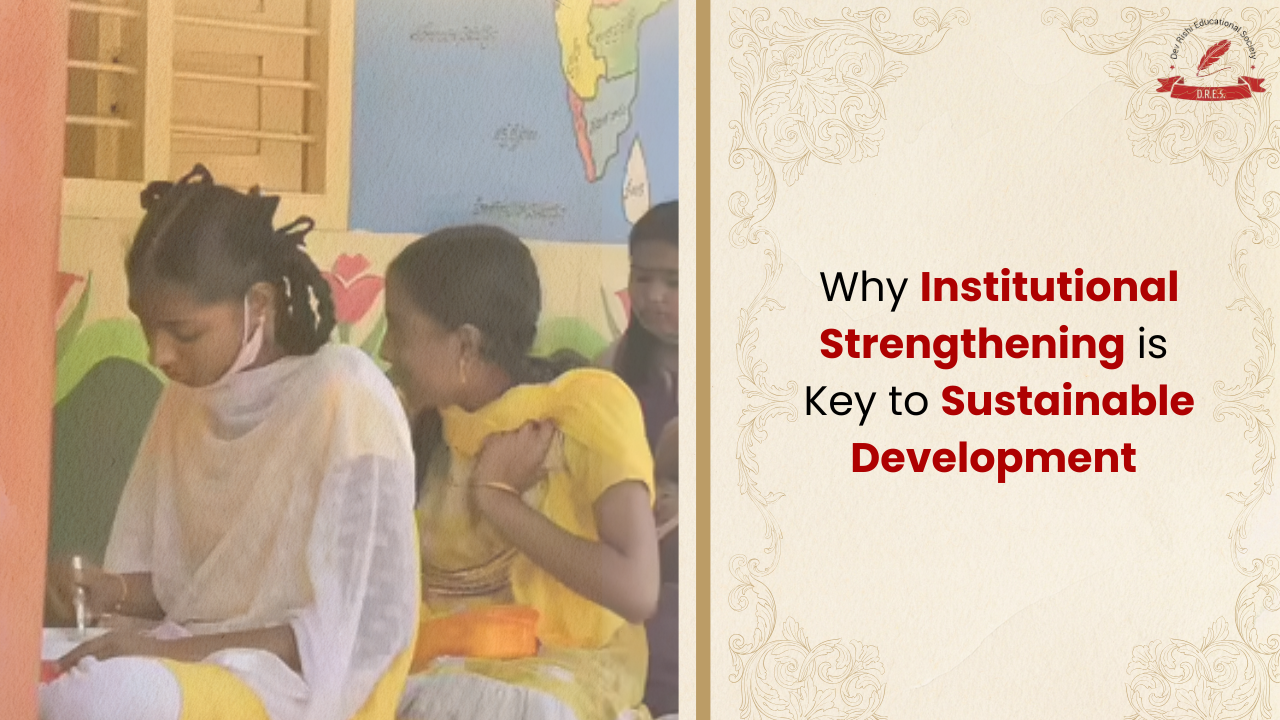
What is Institutional Strengthening?
Institutional strengthening refers to improving the capacity, efficiency, and effectiveness of organizations and systems responsible for development.
It includes:
✪ Enhancing administrative and operational capabilities
✪ Improving planning and implementation processes
✪ Strengthening monitoring and accountability systems
✪ Building skilled human resources
✪ Promoting efficient resource utilization
Strong institutions are better equipped to deliver consistent and long-term results.
Why Institutions Matter in Development
Development initiatives often fail not due to lack of resources, but due to weak implementation systems. Institutions act as the link between policy and execution.
Effective institutions ensure:
⬟ Proper utilization of resources
⬟ Timely implementation of programmes
⬟ Accountability and transparency
⬟ Continuity of development efforts
Without strong institutions, even well-designed programmes may not achieve their intended outcomes.
Role in Ensuring Sustainability
Sustainability means that development outcomes continue even after external support or funding ends. Institutional strengthening plays a key role in achieving this.
It helps in:
⟢ Creating systems that function independently
⟢ Building local ownership and leadership
⟢ Ensuring long-term maintenance of infrastructure
⟢ Embedding processes within governance structures
When institutions are strong, development becomes self-sustaining.
Key Areas of Institutional Strengthening
Capacity Building: Training individuals and teams to improve their skills and knowledge.
System Development: Establishing clear processes, guidelines, and operational frameworks.
Governance and Accountability: Strengthening transparency, monitoring, and reporting mechanisms.
Resource Management: Ensuring efficient use of financial, human, and technical resources.
Technology Integration: Using digital tools to improve efficiency and data management.
Importance in Multi-Sector Development
Institutional strengthening is relevant across all sectors, including:
⬢ Skill development and livelihoods
⬢ Water and sanitation
⬢ Health and hygiene
⬢ Governance and planning
A strong institutional base ensures that all these sectors function effectively and are interconnected.
Challenges in Institutional Strengthening
Despite its importance, institutional strengthening faces several challenges:
⨯ Limited access to training and resources
⨯ Resistance to change
⨯ Weak coordination between stakeholders
⨯ Inconsistent implementation practices
Addressing these challenges requires long-term commitment and structured interventions.
Role of Partnerships and Collaboration
Institutional strengthening is often achieved through collaboration between:
⧗ Government bodies
⧗ Development organizations
⧗ Training institutions
⧗ Community groups
These partnerships help in sharing knowledge, resources, and best practices, leading to stronger systems.
Impact on Development Outcomes
When institutions are strengthened, the impact is visible across multiple areas:✹ Improved service delivery
✹ Better programme implementation
✹ Increased efficiency and accountability
✹ Enhanced community trust
Strong institutions create a stable foundation for long-term growth.
The Way Forward
To prioritize institutional strengthening in development efforts, it is important to:⟡ Invest in continuous capacity building
⟡ Standardize processes and systems
⟡ Promote use of technology
⟡ Strengthen monitoring and evaluation frameworks
⟡ Encourage community participation
A structured and long-term approach is essential.
Conclusion
Institutional strengthening is not just a supporting element of development; it is a core requirement for achieving sustainable outcomes. Strong institutions ensure that development initiatives are effectively implemented, monitored, and sustained over time.Across various sectors, practical experiences consistently demonstrate that when institutions are empowered with the right systems, skills, and support, the impact becomes long-lasting.
Work facilitated by organizations such as Dev Rishi Educational Society (DRES) reflects how strengthening institutional frameworks can enhance governance, improve programme delivery, and contribute to sustainable development at scale.