
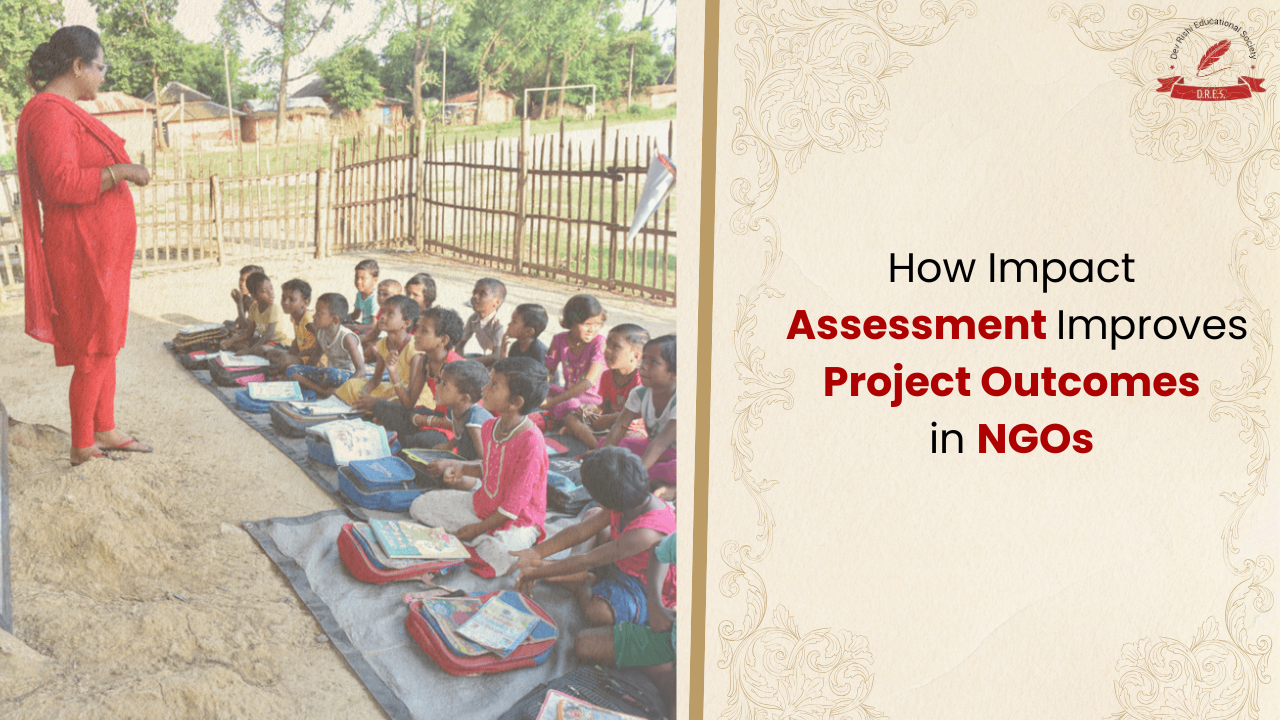
How Impact Assessment Improves
Project Outcomes in NGOs
Introduction
Development projects are designed to create measurable change in communities, but implementing activities alone does not guarantee meaningful outcomes.
The true success of any initiative lies in understanding its impact.Impact assessment plays a crucial role in evaluating whether a project has achieved its intended objectives.
For NGOs working across sectors such as livelihoods, health, governance, and education, impact assessment helps ensure that interventions are effective, efficient, and aligned with community needs.
What is Impact Assessment?
Impact assessment is a systematic process used to evaluate the changes brought about by a project or programme. It focuses on understanding the long-term effects of interventions on individuals, communities, and systems.
Key aspects include:
✺ Measuring outcomes and results
✺ Comparing expected and actual impact
✺ Identifying positive and negative changes
✺ Understanding sustainability of outcomes
It provides a deeper understanding beyond basic activity tracking.
Difference Between Monitoring and Impact Assessment
While monitoring tracks progress during implementation, impact assessment focuses on the final results and long-term effects.⬢ Monitoring answers: Are activities being carried out as planned?
⬢ Impact Assessment answers: What difference did the project actually make?Both are important, but impact assessment provides insights into real change.
Why Impact Assessment is Important for NGOs+ Measuring Real Outcomes: It helps NGOs understand whether their interventions have improved livelihoods, health, or governance outcomes.+ Improving Programme Design: Lessons learned from impact assessment can be used to refine future projects.+ Strengthening Accountability: Clear evidence of impact increases transparency with donors, partners, and communities.+ Supporting Funding and Partnerships: Demonstrating measurable impact enhances credibility and attracts support from stakeholders.
Key Methods Used in Impact Assessment
Impact assessment relies on various methods to gather and analyze data:⟣ Baseline and endline surveys
⟣ Field observations
⟣ Interviews and focus group discussions
⟣ Case studies and success stories
⟣ Quantitative and qualitative data analysisCombining these methods provides a comprehensive understanding of impact.
Role of Data in Impact Assessment
Data is central to effective impact assessment. Accurate and reliable data helps in:⟟ Measuring changes over time
⟟ Identifying trends and patterns
⟟ Supporting evidence-based conclusionsData-driven assessments ensure that findings are objective and actionable.
Improving Project Outcomes Through Assessment
Impact assessment is not just about evaluation; it is also about improvement. Insights gained can be used to:⤷ Modify implementation strategies
⤷ Address gaps and challenges
⤷ Enhance efficiency
⤷ Scale successful interventionsContinuous learning leads to better project outcomes.
Challenges in Conducting Impact Assessments
NGOs often face challenges such as:⨳ Limited resources and expertise
⨳ Difficulty in collecting accurate data
⨳ Time constraints
⨳ Measuring intangible outcomes such as behavior changeOvercoming these challenges requires structured approaches and technical support.
Role of Technology in Impact Assessment
Technology has made impact assessment more efficient and reliable. Digital tools help in:⌬ Real-time data collection
⌬ Data analysis and visualization
⌬ Automated reporting
⌬ Improved accuracy and transparencyThese tools enhance the overall quality of assessments.
Long-Term Benefits of Impact Assessment
When conducted effectively, impact assessment leads to:✷ Improved programme effectiveness
✷ Better resource allocation
✷ Stronger institutional credibility
✷ Enhanced community trustIt ensures that development efforts are meaningful and sustainable.
The Way Forward
To strengthen impact assessment practices, NGOs should focus on:⧈ Building internal capacity
⧈ Standardizing methodologies
⧈ Integrating assessment into programme design
⧈ Using both qualitative and quantitative approaches
⧈ Encouraging continuous learningA systematic approach can significantly improve outcomes.
Conclusion
Impact assessment is essential for understanding the true value of development initiatives. It provides insights into what works, what does not, and how programmes can be improved for greater effectiveness.Field-level practices increasingly show that organizations that invest in structured impact assessment frameworks achieve better and more sustainable results.
Experiences from initiatives associated with Dev Rishi Educational Society (DRES) reflect how evidence-based evaluation can strengthen programme outcomes and contribute to more effective development strategies.
The Role of Data and Research in Development Planning in India
Introduction
Effective development planning is not just about intentions or resource allocation. It requires a clear understanding of ground realities, needs, and measurable outcomes. In recent years, data and research have become essential tools in designing and implementing development programmes in India.
From identifying community needs to evaluating programme impact, data-driven approaches enable institutions to make informed decisions.
Research adds depth by providing insights into patterns, challenges, and long-term trends, ensuring that development efforts are both targeted and sustainable.

Why Data Matters in Development Planning
Data provides a factual basis for planning and decision-making. Without accurate information, development initiatives may fail to address real issues or may allocate resources inefficiently.
Key benefits of using data include:
✵ Identifying priority areas and gaps
✵ Setting realistic goals and targets
✵ Tracking progress over time
✵ Measuring outcomes and impact
Data ensures that planning is grounded in reality rather than assumptions.
Types of Data Used in Development
Development planning relies on different types of data:
1. Baseline Data - Provides information about the current situation before a programme begins.
2. Monitoring Data - Tracks progress during implementation.
3. Endline Data - Measures outcomes after programme completion.
4. Secondary Data - Includes government reports, surveys, and existing research studies.
Each type of data plays a specific role in the planning and evaluation process.
Role of Research in Understanding Ground Realities
While data provides numbers, research helps interpret those numbers. It explains why certain patterns exist and what factors influence outcomes. Research methods include:
⟰ Field studies and surveys
⟰ Interviews and focus group discussions
⟰ Case studies
⟰ Policy analysis
Research adds context, making data more meaningful and actionable.
Data-Driven Decision Making
Data enables institutions to move from reactive to proactive decision-making.
It helps in:
⤿ Designing targeted interventions
⤿ Allocating resources efficiently
⤿ Identifying risks and challenges early
⤿ Adjusting strategies based on evidence
Evidence-based decisions lead to better programme outcomes.
Importance of Data in Monitoring and Evaluation
Data is central to monitoring and evaluation systems.
It allows organizations to:
⟴ Track performance against targets
⟴ Identify deviations from plans
⟴ Measure impact accurately
⟴ Improve accountability
Without data, evaluation becomes subjective and less reliable.
Use of Technology in Data Collection and Analysis
Digital tools have transformed how data is collected and analyzed.
They enable:
⌗ Real-time data collection through mobile applications
⌗ Faster processing and analysis
⌗ Visualization through dashboards and reports
⌗ Improved accuracy and consistency
Technology makes data-driven planning more efficient and scalable.
Challenges in Using Data and Research
Despite its importance, several challenges exist:
⨹ Lack of reliable data in remote areas
⨹ Limited technical capacity for analysis
⨹ Data fragmentation across sources
⨹ Difficulty in translating data into actionable insights
Addressing these challenges requires investment in systems and training.
Strengthening Data Systems for Better Planning
To improve the use of data in development planning, it is important to:
⧃ Standardize data collection methods
⧃ Build capacity in data analysis
⧃ Integrate data across departments
⧃ Promote transparency and accessibility
⧃ Encourage continuous research and learning
Strong data systems enhance the effectiveness of development programmes.
Impact on Development Outcomes
When data and research are effectively used, the impact is significant:
✶ More targeted and efficient programmes
✶ Better utilization of resources
✶ Improved accountability and transparency
✶ Enhanced long-term sustainability
Data-driven planning leads to measurable and meaningful change.
The Way Forward
As development challenges become more complex, the role of data and research will continue to grow. Integrating advanced tools, improving data literacy, and strengthening research frameworks will be essential. A culture of evidence-based planning can transform how development programmes are designed and implemented.
Conclusion
Data and research are fundamental to effective development planning. They provide the insights needed to design targeted interventions, monitor progress, and evaluate outcomes. Field-level experiences increasingly demonstrate that organizations that adopt structured data systems and research-based approaches achieve better results.
Work associated with Dev Rishi Educational Society (DRES) reflects how integrating data-driven methodologies into programme design and implementation can enhance efficiency, improve decision-making, and contribute to sustainable development outcomes.
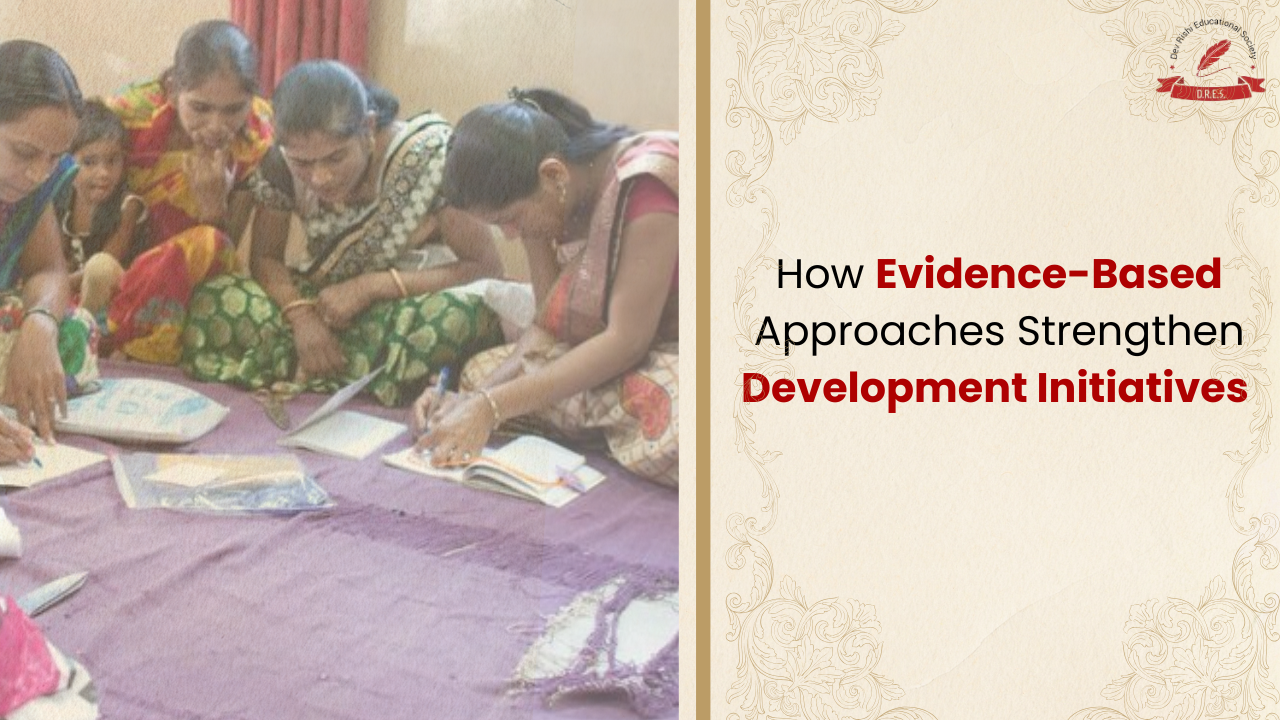
How Evidence-Based Approaches Strengthen Development Initiatives in India
Introduction
Development initiatives are often driven by intent, resources, and policy frameworks. However, without a strong foundation of evidence, even well-designed programmes may fail to deliver meaningful outcomes.
In recent years, there has been a growing shift toward evidence-based approaches in development planning and implementation.
An evidence-based approach ensures that decisions are guided by data, research, and real-world insights rather than assumptions. This leads to more effective, efficient, and sustainable development interventions.
What is an Evidence-Based Approach?
An evidence-based approach involves using reliable data, research findings, and field insights to design, implement, and evaluate development programmes.
It focuses on:
✽ Identifying what works and what does not
✽ Using data to guide decisions
✽ Continuously improving strategies based on evidence
✽ Measuring outcomes and impact
This approach ensures that development efforts are grounded in reality.
Why Evidence Matters in Development
In complex and diverse contexts like India, one-size-fits-all solutions rarely work. Evidence helps in understanding local needs and designing context-specific interventions.
Key benefits include:
⟠ Better targeting of beneficiaries
⟠ Improved programme design
⟠ Efficient use of resources
⟠ Reduced risk of failure
Evidence allows organizations to move from assumptions to informed action.
Role of Data and Research
Data and research are the backbone of evidence-based approaches.They help in:
⟤ Identifying baseline conditions
⟤ Tracking progress and performance
⟤ Measuring outcomes and impact
⟤ Understanding trends and patterns
Both quantitative and qualitative data are important for a comprehensive understanding.
Improving Programme Effectiveness
Evidence-based approaches significantly enhance programme effectiveness by:
⤳ Identifying successful strategies
⤳ Eliminating ineffective practices
⤳ Refining implementation models
⤳ Ensuring alignment with ground realities
This leads to better outcomes and higher efficiency.
Strengthening Accountability and Transparency
When decisions are based on evidence, it becomes easier to demonstrate results. This strengthens accountability toward stakeholders, including communities, funders, and partners.
Benefits include:
⟢ Clear documentation of outcomes
⟢ Increased trust and credibility
⟢ Better reporting and communication
Transparency is essential for long-term sustainability.
Role in Policy and Decision-Making
Evidence-based approaches are increasingly influencing policy decisions. Governments and institutions rely on data and research to:
⌁ Design policies
⌁ Allocate resources
⌁ Evaluate programmes
⌁ Scale successful models
This ensures that policies are practical and impactful.
Challenges in Implementing Evidence-Based Approaches
Despite their advantages, several challenges exist:
⨮ Limited availability of reliable data
⨮ Lack of technical expertise
⨮ Resource constraints
⨮ Difficulty in translating data into action
Overcoming these requires investment in systems, training, and capacity building.
Importance of Continuous Learning
Evidence-based approaches promote a culture of learning and adaptation. Organizations continuously analyze data, learn from outcomes, and improve their strategies.
This leads to:
⟲ Innovation in programme design
⟲ Better responsiveness to challenges
⟲ Continuous improvement in impact
Learning becomes an integral part of development.
Role of Technology
Technology has made it easier to implement evidence-based approaches by enabling:
⌖ Real-time data collection
⌖ Advanced data analysis
⌖ Digital dashboards and reporting
⌖ Improved accessibility of information
These tools enhance efficiency and accuracy.
Impact on Development Outcomes
When evidence-based approaches are effectively applied, the results are significant:
✺ More targeted and impactful programmes
✺ Improved efficiency and resource utilization
✺ Stronger institutional systems
✺ Sustainable and scalable solutions
Evidence transforms development from reactive to strategic.
The Way Forward
To strengthen evidence-based approaches in development, it is important to:
⧉ Invest in data systems and research
⧉ Build technical capacity
⧉ Promote collaboration between institutions
⧉ Encourage data-driven decision-making
⧉ Integrate evidence into all stages of programme design
A systematic approach can enhance overall impact.
Conclusion
Evidence-based approaches are essential for strengthening development initiatives in India. By relying on data, research, and continuous evaluation, organizations can design more effective and sustainable programmes.
Field-level experiences consistently demonstrate that structured, evidence-driven interventions lead to better outcomes and stronger systems.
Work associated with Dev Rishi Educational Society (DRES) reflects how integrating data, research, and evaluation into programme implementation can enhance efficiency, improve accountability, and contribute to long-term development impact.