
From Training to Employment: A
Real Success Story from Rural India
Introduction
Behind every development programme lies a human story. While data reflects numbers, real impact is best understood through the journeys of individuals whose lives have changed.
This is one such story of transformation. A journey from uncertainty to stability, from limited opportunities to meaningful employment. It reflects how structured training and the right support can open new pathways.
Background
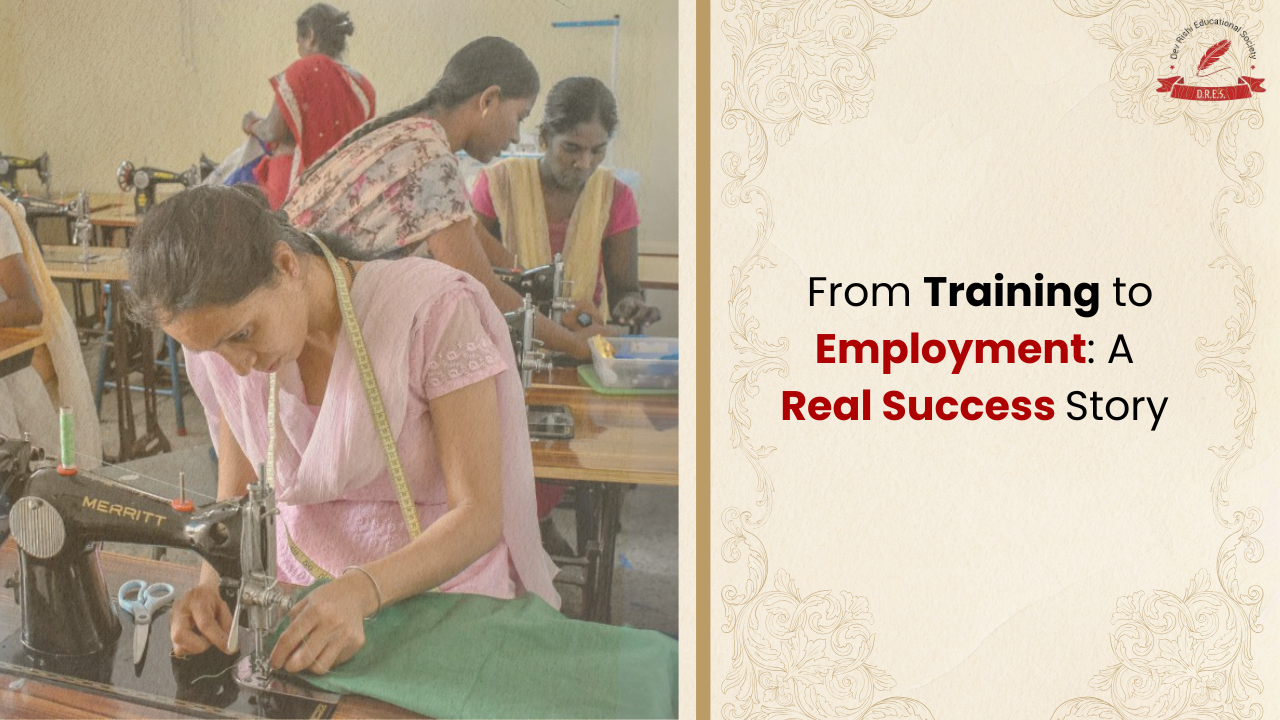
Kavita, a young woman from a small village in Uttarakhand, grew up in a family dependent on seasonal income. Opportunities for stable employment were limited, and like many others in her community, she faced uncertainty about her future. After completing her basic education, Kavita struggled to find work. Without specialized skills or exposure, she found it difficult to secure a stable job.
The Turning Point
Kavita came across a skill development training programme being conducted in her area. Initially hesitant, she decided to enroll after understanding its potential benefits.
The training focused on:
✧ Practical skill development
✧ Communication and workplace behavior
✧ Industry-oriented learning
This marked the beginning of a new direction in her life.
The Training Experience
During the training, Kavita gained not only technical skills but also confidence and clarity.
Key aspects of her learning included:
⬡ Hands-on practical sessions
⬡ Interaction with trainers and peers
⬡ Exposure to real workplace scenarios
⬡ Development of communication skills
The structured approach helped her build both technical competence and professional behavior.
Challenges Along the Way
The journey was not without difficulties.
Kavita faced:
⨳ Initial lack of confidence
⨳ Difficulty adapting to new learning methods
⨳ Financial pressure from her family
With consistent support and guidance, she was able to overcome these challenges and stay committed.
Transition to Employment
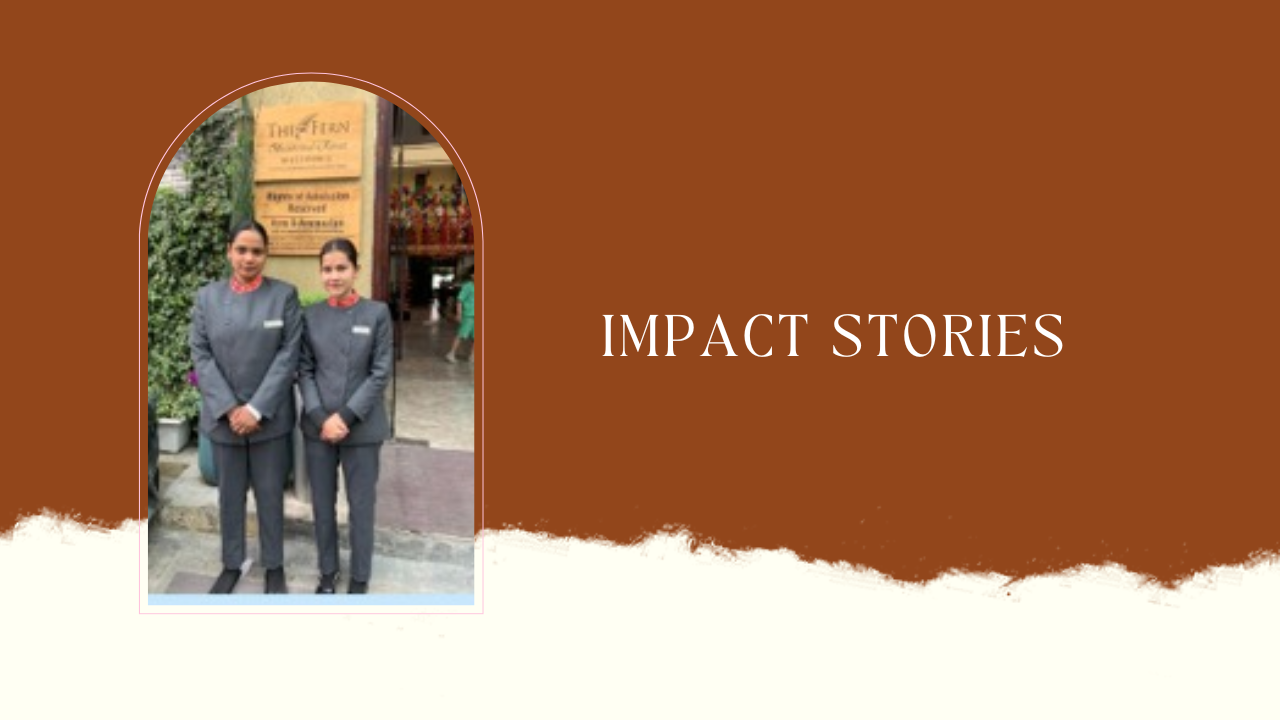
After completing the training, Kavita received support through placement facilitation and secured a job in the hospitality sector.
This transition brought:
✺ Financial stability
✺ Increased confidence
✺ A sense of independence
For the first time, she experienced the security of a stable income.
Impact on Her Life
Employment brought significant changes in Kavita’s personal and professional life.
Key improvements included:
⟢ Ability to support her family
⟢ Improved living conditions
⟢ Greater self-confidence
⟢ Aspirations for future growth
Her transformation became a source of motivation for others.
Ripple Effect in the Community
Kavita’s success had a wider influence on her village.
It led to:
⟟ Increased interest in skill training programmes
⟟ Greater awareness about employment opportunities
⟟ A positive shift in community mindset
One individual’s progress created a broader community impact.
Importance of Structured Support
Kavita’s journey highlights the importance of strong support systems.Key elements include:
⧉ Access to skill development programmes
⧉ Continuous guidance and mentoring
⧉ Placement support
⧉ Community awareness
These factors play a critical role in enabling transformation.
Lessons from the Story
This experience offers several important insights:
✷ Skills are essential for employability
✷ Confidence and mindset are equally important
✷ Support systems significantly influence outcomes
✷ Opportunities can transform lives when accessed effectively
These lessons are relevant across many similar contexts.
The Way Forward
Expanding access to such opportunities can help many more individuals achieve similar progress.
It is important to:
⧗ Increase awareness about available programmes
⧗ Strengthen training infrastructure
⧗ Improve placement linkages
⧗ Encourage community participation
Scaling these efforts can create widespread and lasting impact.
Conclusion
Kavita’s journey from uncertainty to stable employment reflects the true impact of well-structured development initiatives. It demonstrates how the right combination of training, support, and determination can transform individual lives. Field experiences across regions continue to highlight similar stories of change.
Initiatives implemented with the involvement of organizations such as Dev Rishi Educational Society (DRES) show how skill development and employment facilitation can create meaningful opportunities and long-term impact for individuals and communities alike.
A Journey from Rural Livelihood
to Financial Independence
Introduction
For many individuals in rural India, livelihood is often limited to seasonal work, informal labor, or low-income activities. While these sources provide basic survival, they rarely offer stability or growth.
However, with the right opportunities, guidance, and support, this reality can change.
The journey from uncertain income to financial independence is not instant, but it is achievable. It is a story of persistence, learning, and transformation.
Life Before Stability
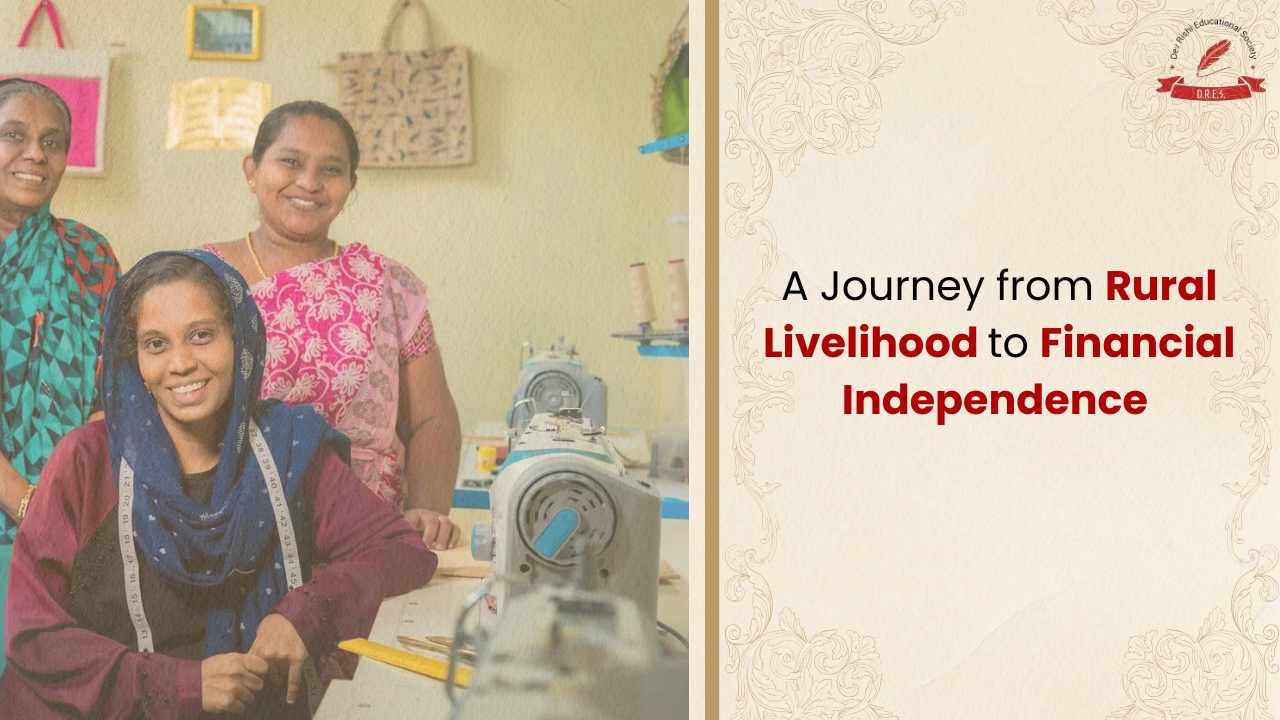
In many rural households, income sources are uncertain and inconsistent. Daily earnings often depend on factors such as availability of work, weather conditions, or local demand.
Common challenges include:
✶ Irregular income cycles
✶ Limited employment opportunities
✶ Dependence on manual labor
✶ Lack of financial planning
This creates a cycle where saving and long-term growth become difficult.
The Desire for Change
The journey toward improvement often begins with the realization that current conditions are not sustainable.
This realization leads to:
⬠ Searching for alternative income opportunities
⬠ Exploring skill-based work options
⬠ Looking for training and support programmes
The desire for a better future becomes the first step toward independence.
Access to Opportunity
Transformation begins when individuals gain access to structured opportunities such as:
⟡ Skill development programmes
⟡ Livelihood promotion initiatives
⟡ Entrepreneurship support systems
These opportunities provide direction and open pathways for growth.
Learning and Skill Building
Skill development is a critical phase in achieving financial independence.
This includes:
⟢ Technical training aligned with industry needs
⟢ Understanding basic financial concepts
⟢ Developing communication and confidence
⟢ Learning to manage work responsibilities
Skills form the foundation for stable and sustainable income.
Transition to Stable Income
With the right skills, individuals begin to move toward stable income sources.
This may involve:
⌁ Securing employment opportunities
⌁ Starting small businesses
⌁ Expanding existing livelihood activities
Regular income creates a sense of stability and control over life.
Managing Finances and Growth
Financial independence requires not just earning, but managing resources effectively.
Key aspects include:
⟣ Saving a portion of income
⟣ Reducing unnecessary expenses
⟣ Planning for future needs
⟣ Reinvesting in livelihood activities
Financial awareness strengthens long-term stability and growth.
Overcoming Challenges Along the Way
The journey toward financial independence is not without obstacles.
Individuals often face:
⨳ Initial uncertainty and risk
⨳ Limited access to support systems
⨳ Market fluctuations
⨳ Balancing personal and professional responsibilities
Persistence and proper guidance help overcome these challenges.
Impact on Family
Financial stability has a direct and positive impact on families.
It leads to:
✺ Improved living conditions
✺ Better access to education
✺ Reduced financial stress
✺ Greater stability in daily life
Families begin to experience long-term security and improved well-being.
Ripple Effect in the Community
Individual success often inspires broader community transformation.
Communities begin to:
⟟ Recognize new opportunities
⟟ Encourage participation in development programmes
⟟ Shift toward skill-based and entrepreneurial activities
This creates a culture of aspiration and growth.
Importance of Support Systems
Sustained progress is often supported by structured systems that provide:
⧉ Training and skill development
⧉ Access to resources and opportunities
⧉ Mentoring and guidance
⧉ Continuous engagement
Strong support systems play a vital role in enabling long-term success.
Lessons from the Journey
This journey highlights several important insights:
✷ Skills are essential for income stability
✷ Opportunities must be accessible
✷ Financial literacy is crucial
✷ Consistency leads to long-term growth
These lessons are applicable across diverse communities.
The Way Forward
To enable more such transformations, it is important to:
⧗ Expand access to skill development initiatives
⧗ Strengthen livelihood and entrepreneurship programmes
⧗ Improve financial literacy
⧗ Build stronger market linkages
A comprehensive approach can create wider and more sustainable impact.
Conclusion
The journey from rural livelihood to financial independence reflects the power of opportunity, skill development, and determination. It demonstrates that sustainable change is achievable when individuals are supported with the right tools and guidance.
Across regions, similar transformations continue to emerge where structured interventions align with community participation.
Efforts supported through organizations such as Dev Rishi Educational Society (DRES) highlight how livelihood-focused initiatives can enable individuals to achieve financial stability and long-term independence.
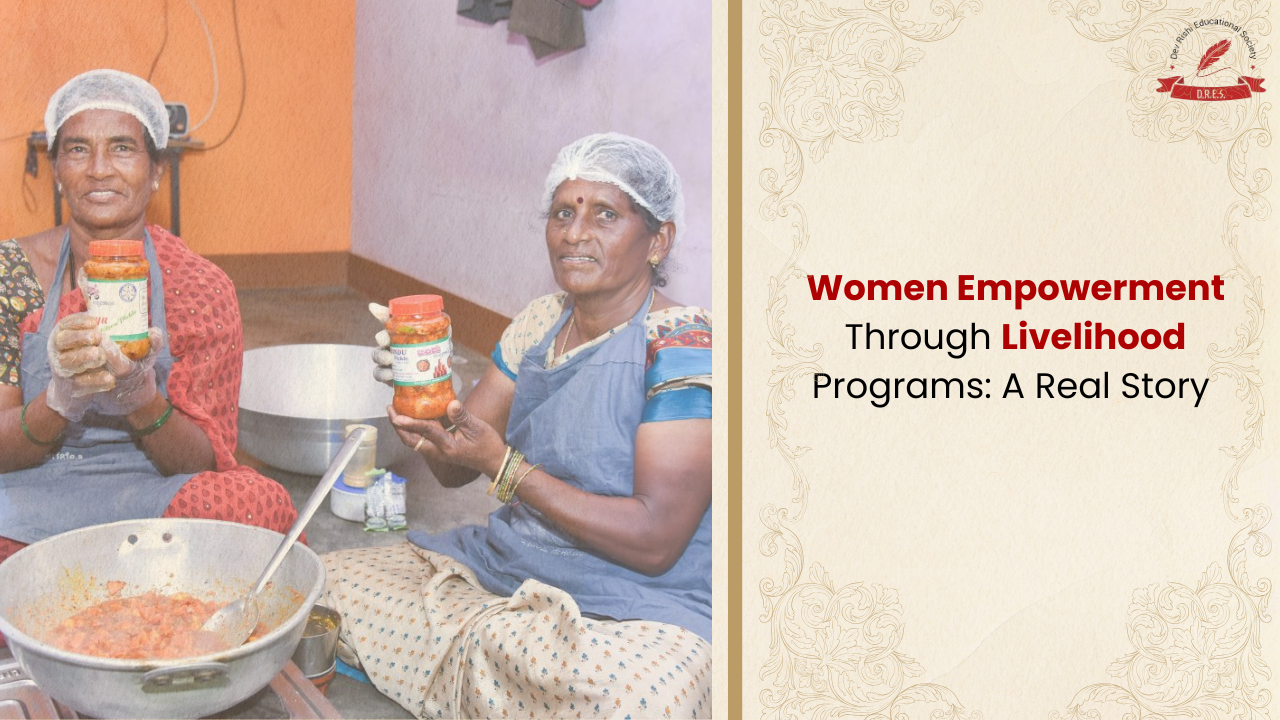
Women Empowerment Through
Livelihood Programs: A Real Story
Introduction
Empowerment is often spoken about in terms of rights and opportunities, but its true meaning becomes visible when individuals gain the ability to make decisions, support themselves, and influence their surroundings.
For many women in rural and underserved communities, access to livelihood opportunities becomes the turning point.
It not only changes their financial situation but also reshapes their identity, confidence, and role within the family and society.
Life Before Opportunity
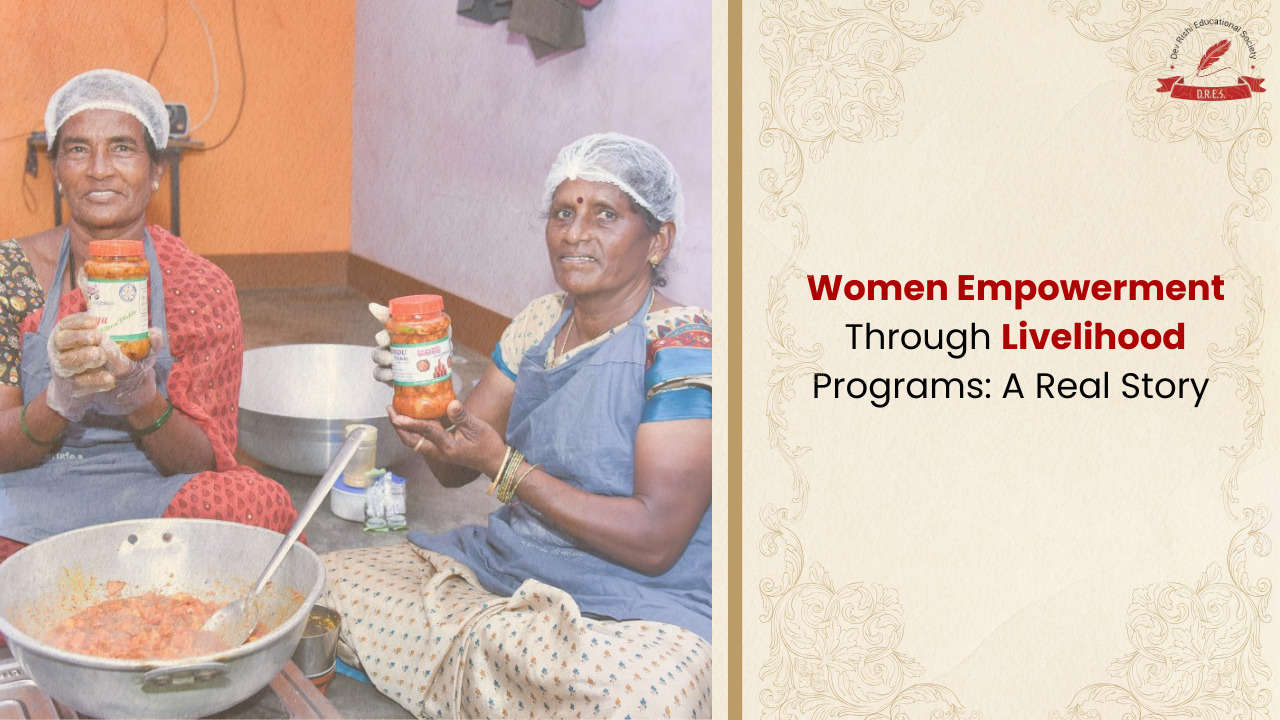
In many communities, women contribute significantly to household responsibilities but have limited access to income-generating opportunities.
Common challenges include:
✺ Financial dependence on family members
✺ Limited exposure to skill-based work
✺ Social and cultural restrictions
✺ Lack of confidence in pursuing opportunities
These factors often limit their participation in economic activities.
The Beginning of Change
The journey toward empowerment often begins with awareness and access to opportunities.
Participation in livelihood programmes introduces:
⬢ New skills and income opportunities
⬢ A supportive and structured learning environment
⬢ Exposure to practical livelihood activities
This creates a strong foundation for change.
Learning and Skill Development
Skill development plays a central role in enabling empowerment.
Through structured programmes, women gain:
⟡ Practical skills aligned with local opportunities
⟡ Understanding of small-scale enterprise activities
⟡ Basic financial literacy
⟡ Communication and confidence-building skills
Learning becomes a pathway toward independence and growth.
Taking the First Step Toward Earning
The first earning experience is often the most significant milestone.
It brings:
⟢ A sense of achievement
⟢ Financial contribution to the household
⟢ Increased self-confidence
This moment marks the beginning of personal and economic transformation.
Overcoming Social and Personal Barriers
The journey toward empowerment involves overcoming multiple challenges.
Women often face:
⨳ Resistance from family or community
⨳ Self-doubt and hesitation
⨳ Balancing household responsibilities with work
With consistent support and determination, these barriers gradually reduce.
Transformation in Identity
As women begin to earn and contribute, their identity within the household and community evolves.
Key changes include:
⬡ Increased participation in decision-making
⬡ Greater respect within the family
⬡ Enhanced self-confidence
⬡ Willingness to take on new responsibilities
Empowerment becomes visible in everyday actions and choices.
Impact on Family and Children
Women’s empowerment creates a positive and lasting impact on families.
It leads to:
✷ Improved financial stability
✷ Better educational opportunities for children
✷ Healthier living conditions
✷ Stronger family support systems
The benefits extend beyond individuals to the entire household.
Collective Growth Through Community Groups
Group-based participation strengthens the impact of livelihood programmes.
These groups provide:
⟟ Peer support and motivation
⟟ Opportunities for collective savings and investment
⟟ Shared learning and problem-solving
Collective engagement enhances confidence and sustainability.
Long-Term Impact on Communities
When women become economically active, communities experience broader transformation.
These changes include:
⟐ Increased economic activity
⟐ Improved social inclusion
⟐ Greater awareness and participation
⟐ Progress toward gender equality
Empowerment creates a strong ripple effect across communities.
Importance of Structured Support
Sustainable empowerment requires continuous and structured support systems.
This includes:
⧉ Access to training and skill development
⧉ Market linkages for products and services
⧉ Financial support mechanisms
⧉ Ongoing mentoring and guidance
Strong support systems ensure long-term and scalable impact.
Lessons from the Journey
This journey highlights key insights:
✹ Economic independence is the foundation of empowerment
✹ Skills and confidence grow together
✹ Support systems accelerate transformation
✹ Collective participation strengthens outcomes
These lessons are relevant across diverse communities.
The Way Forward
To expand women’s empowerment through livelihoods, it is important to:
⧗ Increase access to skill development programmes
⧗ Promote entrepreneurship opportunities
⧗ Strengthen market linkages
⧗ Encourage community-level participation
A focused and inclusive approach can create large-scale impact.
Conclusion
Women’s empowerment through livelihood programmes goes beyond income generation. It is about creating opportunities, building confidence, and enabling individuals to take control of their lives.
Across regions, similar transformations continue to emerge where structured interventions support women in becoming economically and socially empowered.
Initiatives facilitated through organizations such as Dev Rishi Educational Society (DRES) demonstrate how livelihood-focused programmes can contribute to long-term empowerment and inclusive community development.
Behind Every Number is a Story:
Real Impact on Communities
Introduction
In development work, impact is often measured through numbers. The number of people trained, households reached, communities covered, or programmes implemented.
While these figures are important, they only tell part of the story.Behind every number lies a human experience.
A life that has changed, a challenge that has been overcome, and a future that has been reshaped. Understanding this human dimension is essential to truly appreciate the impact of development initiatives.
The Meaning Behind the Numbers
Statistics provide a broad picture of progress, but they often do not capture individual journeys and experiences.
For example:
✸ A number representing trained individuals reflects hours of learning and effort
✸ A figure showing employment generation represents families gaining stability
✸ A count of awareness sessions reflects shifts in mindset and behavior
Each number carries multiple layers of real change.
From Data to Real-Life Change
Development programmes convert plans into measurable outcomes, but these outcomes translate into real-life improvements such as:
⬣ Increased income and financial stability
⬣ Better access to education and healthcare
⬣ Improved awareness and living conditions
⬣ Enhanced confidence and decision-making ability
Data reflects progress, but impact is experienced in everyday life.
Individual Stories Within Collective Impact
Every community-level achievement is built on individual transformations.
These may include:
⟡ A person securing employment after training
⟡ A household improving its livelihood
⟡ A community adopting better practices
⟡ A group building collective strength
Together, these stories form the broader narrative of development.
The Ripple Effect of Change
Impact is rarely limited to individuals and often spreads across families and communities.
This ripple effect leads to:
⟢ Increased awareness among others
⟢ Greater participation in programmes
⟢ Improved social and economic conditions
⟢ Stronger community systems
One positive change often inspires many more.
Beyond Immediate Outcomes
True impact goes beyond short-term results and creates lasting change.
Long-term outcomes include:
⟣ Sustainable livelihoods
⟣ Improved quality of life
⟣ Strengthened institutions
⟣ Enhanced community resilience
Sustainability remains the true measure of success.
Role of Consistent Effort
Achieving meaningful impact requires sustained and consistent effort.
This includes:
⟳ Regular engagement with communities
⟳ Consistent programme delivery
⟳ Ongoing monitoring and improvement
⟳ Building trust and relationships
Consistency ensures that progress continues over time.
Importance of Measuring Impact
While stories reflect depth, measurement provides scale and clarity.
Impact measurement helps in:
⧉ Assessing programme performance
⧉ Identifying areas for improvement
⧉ Ensuring accountability
⧉ Guiding future interventions
A balance between data and narratives provides a complete understanding.
Challenges in Capturing Real Impact
Capturing the full scope of impact can be complex.
Common challenges include:
⨳ Difficulty in quantifying qualitative changes
⨳ Limited data availability in remote areas
⨳ Variations across community contexts
⨳ Time required to observe long-term outcomes
Addressing these requires strong systems and thoughtful approaches.
Bridging the Gap Between Data and Stories
A comprehensive understanding of impact requires combining:
⟟ Quantitative data to measure scale
⟟ Qualitative insights to understand depth
This integrated approach captures both reach and real transformation.
Impact on Community Development
When individual stories come together, they contribute to broader community development.
This includes:
✺ Improved economic conditions
✺ Increased social inclusion
✺ Better access to essential services
✺ Stronger institutional systems
Communities become more resilient and self-sustaining over time.
The Way Forward
To strengthen impact, it is important to:
⧗ Continue documenting both data and stories
⧗ Enhance monitoring and evaluation systems
⧗ Promote active community participation
⧗ Scale successful interventions
A holistic approach can maximize both reach and effectiveness.
Conclusion
Behind every number in development work lies a story of effort, change, and progress. While data helps measure scale, it is the lived experiences of individuals and communities that truly define impact. Across regions, development initiatives continue to demonstrate this connection between numbers and real-life transformation.
Work carried out through organizations such as Dev Rishi Educational Society (DRES) highlights how structured programmes, supported by consistent engagement, can create measurable outcomes while also transforming lives at the grassroots level.