
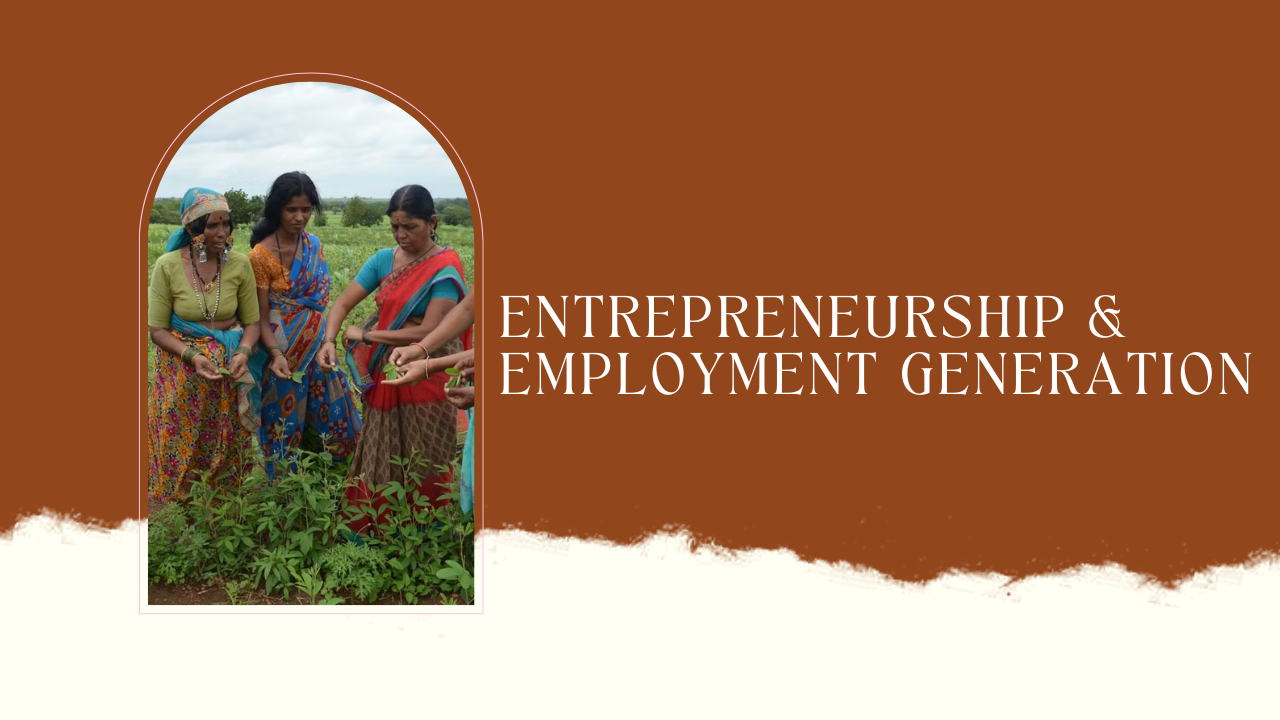
How Rural Entrepreneurship is Driving Economic Growth in India
Introduction
Rural India has traditionally been associated with agriculture as its primary source of livelihood. While agriculture continues to play a vital role, it alone cannot meet the growing economic aspirations of the population. In recent years, rural entrepreneurship has emerged as a powerful driver of economic growth, creating new opportunities beyond traditional occupations.
From small-scale enterprises to community-based production units, rural entrepreneurship is transforming local economies and enabling individuals to become self-reliant.
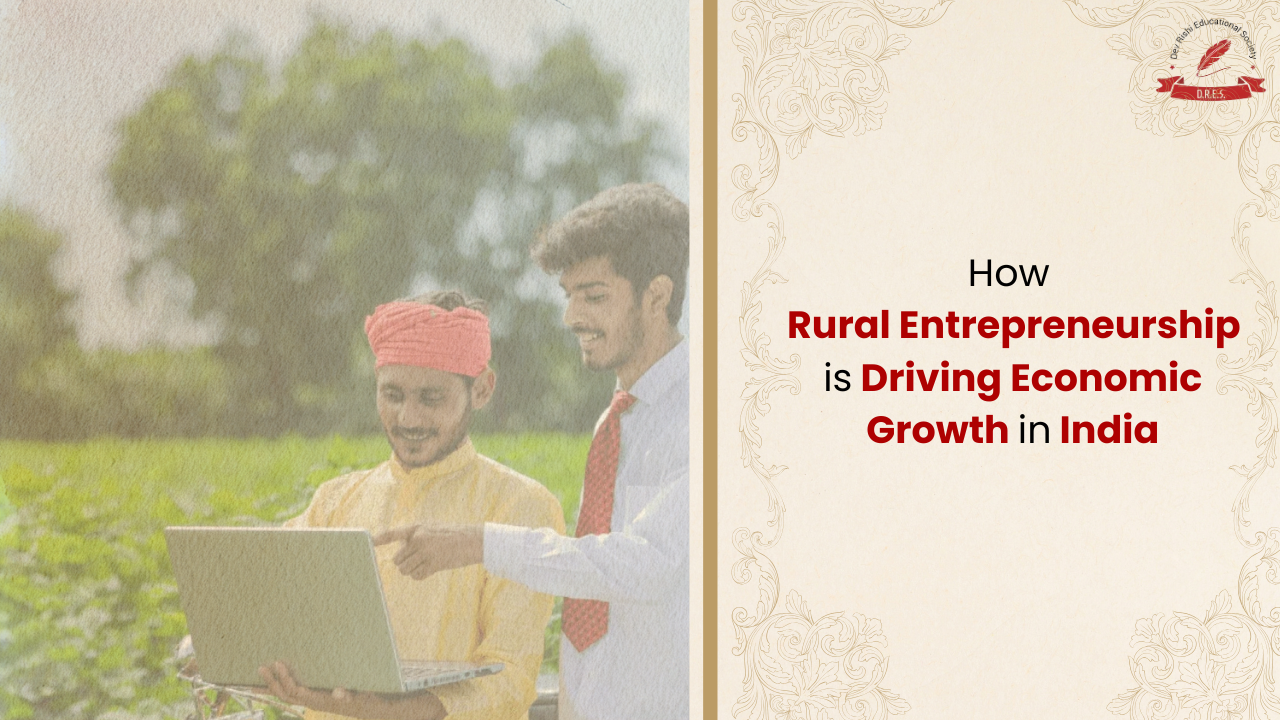
Understanding Rural Entrepreneurship
Rural entrepreneurship refers to the establishment of businesses and income-generating activities in rural areas. These enterprises are often based on local resources, traditional skills, and community needs.Common examples include:
- Handicrafts and artisan-based work
- Food processing units
- Small retail businesses
- Service-based enterprises
- Agro-based industries
These ventures not only generate income for individuals but also create employment opportunities within the community.
Why Rural Entrepreneurship Matters
Rural entrepreneurship plays a critical role in strengthening the economic fabric of the country.
1. Diversification of Income SourcesIt reduces dependence on agriculture by introducing alternative livelihood options.
2. Local Employment GenerationEntrepreneurial activities create jobs within villages, reducing the need for migration to urban areas.
3. Utilization of Local ResourcesRural enterprises make effective use of locally available raw materials and skills.
4. Empowerment of Women and YouthEntrepreneurship provides opportunities for marginalized groups to participate in economic activities.
Role of Skill Development in Entrepreneurship
Skill development acts as the foundation for successful entrepreneurship. Without proper training, individuals may struggle with business planning, financial management, and market understanding.Training programs that focus on:
< Business skills
< Financial literacy
< Product development
< Market strategies
help individuals transition from learners to entrepreneurs.
Importance of Business Incubation Support
Starting a business comes with risks and uncertainties. Rural business incubators play a crucial role in reducing these risks by providing structured support.They assist with:
* Idea validation
* Business planning
* Mentorship
* Access to resources
* Market connections
This support system increases the chances of success for first-time entrepreneurs.
Market Linkages: The Key to Sustainability
One of the biggest challenges faced by rural entrepreneurs is access to markets. Without proper channels to sell their products, income generation remains limited.Market linkage initiatives help by:
/ Connecting producers with buyers
/ Facilitating participation in exhibitions and fairs
/ Promoting products through digital and physical platforms
/ This ensures consistent demand and fair pricing.
Challenges in Rural Entrepreneurship
Despite its potential, rural entrepreneurship faces several barriers:
1. Limited access to finance
2. Lack of infrastructure
3. Low awareness of market trends
4. Limited exposure to modern business practices
Addressing these challenges requires coordinated efforts and long-term support systems.
Impact on Rural Economy
} When entrepreneurship grows in rural areas, the impact is widespread:
} Increase in household income
} Strengthening of local supply chains
} Development of micro-economies
} Reduction in unemployment
Over time, this leads to more balanced regional development.
The Way Forward
To further strengthen rural entrepreneurship in India, it is important to:
| Expand access to skill development programs
| Strengthen incubation and mentoring systems
| Improve financial inclusion
| Promote digital adoption
| Encourage institutional collaboration
A well-supported entrepreneurial ecosystem can unlock immense economic potential in rural regions.
Conclusion
Rural entrepreneurship is not just about starting businesses; it is about creating opportunities where they did not exist before. By enabling individuals to generate income within their communities, it contributes to long-term economic stability and growth.
Efforts led by organizations such as DRES highlight how structured interventions, incubation support, and community-based approaches can nurture entrepreneurship and create sustainable employment opportunities across rural landscapes.
Role of Self-Help Groups (SHGs) in Promoting Employment and
Income Generation in India
Introduction
Across rural India, one of the most effective models for economic empowerment has emerged not from large institutions, but from small, community-driven groups. Self-Help Groups (SHGs) have become a cornerstone of rural development by enabling individuals, especially women, to come together, pool resources, and create sustainable income opportunities.
Over time, SHGs have evolved from simple savings groups into powerful engines of entrepreneurship, employment, and social transformation.

What Are Self-Help Groups (SHGs)?
Self-Help Groups are small, informal associations of individuals, typically consisting of 10 to 20 members, who come together to save regularly and support each other financially and socially.
Key features include:
^ Regular savings contributions
^ Internal lending among members
^ Collective decision-making
^ Focus on mutual support and accountability
These groups create a strong foundation for financial inclusion and community-based development.
How SHGs Promote Employment
SHGs play a direct role in generating employment opportunities at the grassroots level.
1. Access to MicrofinanceThrough pooled savings and access to bank linkages, SHG members can take small loans to start income-generating activities.
2. Support for Small EnterprisesMembers use financial support to initiate activities such as tailoring, handicrafts, food processing, retail shops, and agricultural ventures.
3. Collective Business ModelsMany SHGs operate as groups, producing and selling goods collectively. This reduces risk and increases productivity.
4. Skill Development IntegrationTraining programs often complement SHG activities, enabling members to improve product quality and business management.
Empowerment of Women Through SHGs
One of the most significant impacts of SHGs is the empowerment of women. In many rural areas, women have limited access to financial resources and decision-making platforms. SHGs change this dynamic by:
+ Providing financial independence
+ Encouraging participation in economic activities
+ Building confidence and leadership skills
+ Strengthening social identity
As women begin to earn and contribute financially, their role within the household and community becomes stronger.
SHGs and Entrepreneurship Development
SHGs serve as a stepping stone toward entrepreneurship. Many members who start with small income-generating activities gradually expand into full-fledged enterprises.This transition is supported by:
-- Training and capacity building
-- Exposure to markets
-- Participation in exhibitions and fairs
-- Mentorship and guidance
Over time, SHGs contribute to the creation of micro and small enterprises in rural areas.
Importance of Market Linkages
For SHG-based enterprises to succeed, access to markets is essential. Without proper platforms to sell their products, income remains limited.Market linkage initiatives help SHGs by:
| Connecting them with buyers and institutions | Enabling participation in exhibitions such as fairs and trade events
| Promoting products through organized channels | This ensures better visibility, demand, and income stability.
Challenges Faced by SHGs
Despite their success, SHGs face several challenges:
\ Limited access to larger credit facilities
\ Lack of exposure to modern market trends
\ Inconsistent product quality
\ Limited branding and marketing capabilities
Addressing these challenges requires continuous support and institutional backing.
Strengthening SHGs for Long-Term Impact
To enhance the effectiveness of SHGs, the following steps are important:
1] Capacity building and advanced training
2] Strengthening financial literacy
3] Improving access to credit and banking services
4] Creating stronger market linkages
5] Encouraging digital adoption
These measures help SHGs transition from small groups to sustainable economic units.
Impact on Rural Economy
The contribution of SHGs extends beyond individual members. Their impact includes:
* Increased household income
* Reduction in poverty levels
* Strengthening of local economies
* Promotion of inclusive growth
As SHGs grow, they create a network of economic activity that benefits entire communities.
Conclusion
Self-Help Groups have proven to be one of the most effective models for promoting employment and income generation at the grassroots level. By combining financial inclusion with collective action, they create opportunities that are both accessible and sustainable.
Field-level experiences increasingly show that when SHGs are supported through structured training, market linkage, and institutional guidance, their impact multiplies significantly. Initiatives facilitated by organizations like Dev Rishi Educational Society (DRES) reflect how community-based models can evolve into powerful drivers of rural entrepreneurship and economic resilience.
How Business Incubation Supports First-Time Entrepreneurs in India
Introduction
Starting a business is often seen as a pathway to independence and financial growth. However, for many first-time entrepreneurs, especially in rural and semi-urban areas, the journey from idea to execution is filled with uncertainty.
Limited access to guidance, finance, and market understanding often prevents promising ideas from turning into sustainable enterprises.
This is where business incubation plays a critical role. By providing structured support, mentorship, and resources, incubation systems help individuals move from aspiration to action with greater confidence and clarity.
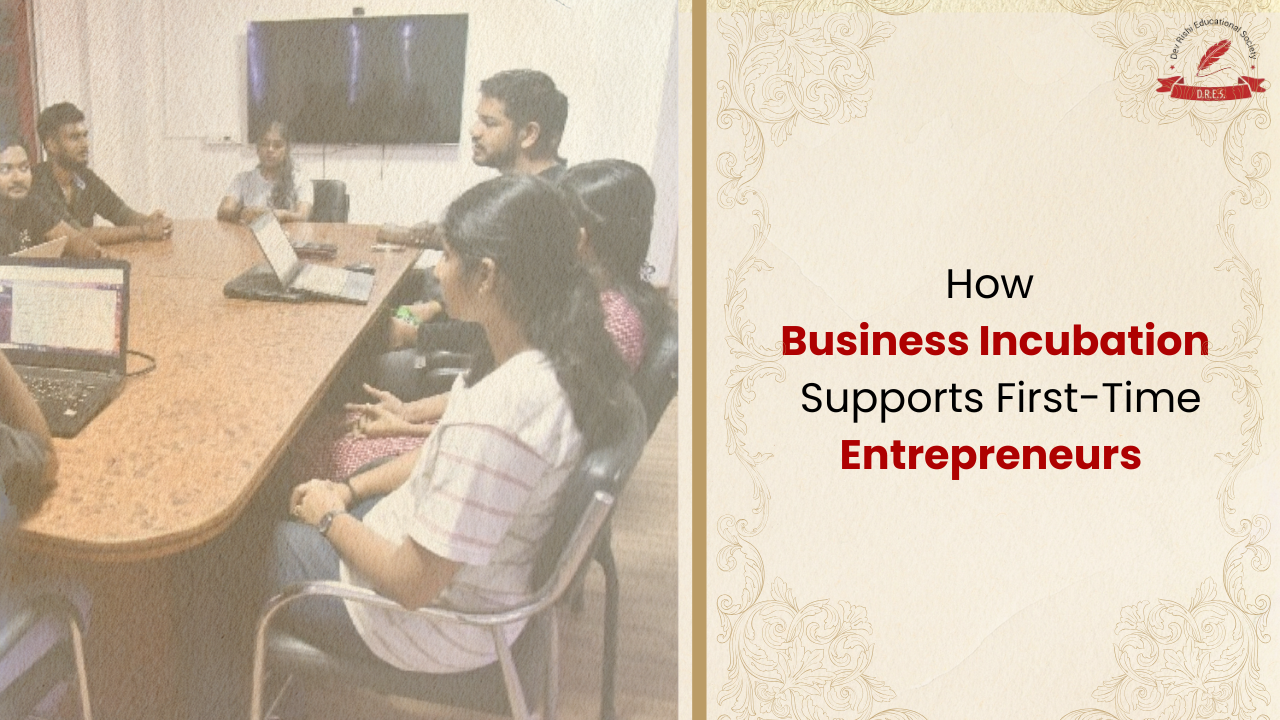
What is Business Incubation?
Business incubation refers to a structured support system designed to nurture early-stage entrepreneurs. It provides guidance, training, and resources required to start and grow a business successfully.
★ Incubation support typically includes:
★ Business planning assistance
★ Mentorship and advisory support
★ Skill development and training
★ Access to networks and markets
★ Guidance on financial management
For first-time entrepreneurs, this ecosystem reduces risk and increases the likelihood of success.
Why First-Time Entrepreneurs Need Support
Entrepreneurship requires more than just an idea. It involves planning, decision-making, financial management, and market understanding. First-time entrepreneurs often face challenges such as:
➤ Lack of business knowledge
➤ Limited access to capital
➤ Fear of failure
➤ Absence of mentorship
➤ Difficulty in accessing markets
Without proper guidance, many potential entrepreneurs either abandon their ideas or struggle to sustain their ventures.
How Business Incubation Makes a Difference
Business incubation provides a structured pathway that addresses these challenges.
1. Idea to Business Transformation
Incubation helps individuals refine their ideas into viable business models. This includes identifying target markets, defining products or services, and understanding customer needs.
2. Skill and Capacity Building
Entrepreneurs are trained in essential business skills such as budgeting, pricing, inventory management, and marketing strategies.
3. Mentorship and Guidance
Access to experienced mentors allows entrepreneurs to make informed decisions and avoid common mistakes.
4. Risk Reduction
Structured support reduces the uncertainty associated with starting a business, making the process more manageable.
5. Market Linkages
Incubators connect entrepreneurs with buyers, suppliers, and platforms where they can showcase and sell their products.
Role of Rural Business Incubators
In rural areas, business incubation takes on an even more important role. Many individuals have skills and ideas but lack exposure to formal business practices.
≡ Rural incubators support:
≡ Local enterprises based on traditional skills
≡ Micro and small businesses
≡ SHG-based enterprises
≡ Agro and non-agro businesses
They help transform informal activities into structured and income-generating ventures.
Importance of Market Access
Even a well-established business cannot succeed without access to markets. One of the key strengths of incubation support is its focus on connecting entrepreneurs with market opportunities.
This may include:
§ Participation in exhibitions and fairs
§ Linking with institutional buyers
§ Promoting products through organized platforms
§ Market access ensures sustainability and growth of enterprises.
Challenges in Business Incubation
While incubation offers strong support, certain challenges remain:
⇒ Limited reach in remote areas
⇒ Resource constraints
⇒ Need for long-term mentorship
⇒ Difficulty in scaling small enterprises
Addressing these challenges requires stronger institutional frameworks and partnerships.
Impact on Employment and Economy
Business incubation contributes significantly to employment generation. As new enterprises are established, they create jobs not only for the entrepreneur but also for others in the community.
The broader impact includes:
❈ Increased income levels
❈ Local economic development
❈ Reduced migration
❈ Promotion of innovation
Over time, incubation systems help build a more resilient and self-reliant economy.
The Way Forward
To strengthen business incubation in India, it is important to:
⚡ Expand incubation centers in rural areas
⚡ Integrate skill development with entrepreneurship
⚡ Strengthen mentorship networks
⚡ Improve access to finance
⚡ Promote digital tools for business growth
A supportive ecosystem can unlock the entrepreneurial potential of millions.
Conclusion
Business incubation is not just about supporting startups; it is about enabling individuals to transform ideas into sustainable livelihoods. For first-time entrepreneurs, especially in underserved regions, this support can be the difference between failure and success.
Experiences from the field increasingly highlight that structured incubation models, combined with training and market linkage, create long-term economic impact. Efforts carried out by institutions such as DRES reflect how guided entrepreneurship can strengthen livelihoods and contribute to inclusive development.
Employment Generation Programs: Bridging the Gap Between Skill and Income
Introduction
India has made significant progress in expanding access to education and skill development. However, a critical challenge still remains unresolved. Many individuals acquire skills, but struggle to convert them into stable income.
This gap between skill acquisition and income generation highlights the need for structured employment generation programs.
These initiatives are designed not just to train individuals, but to ensure that skills translate into real economic opportunities.
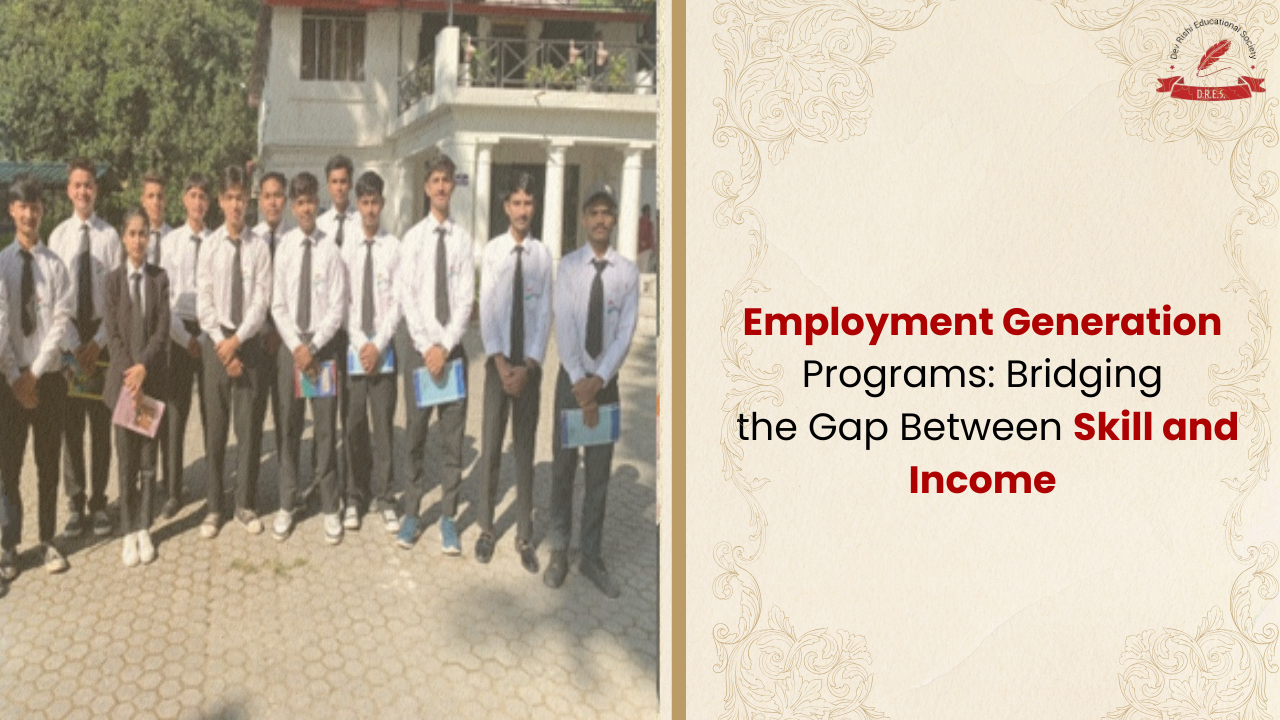
Understanding the Skill-to-Income Gap
Over the years, skill development initiatives have focused on training large numbers of candidates. While this has increased awareness and participation, it has not always resulted in proportional employment outcomes.Common issues include:
║ Skills not aligned with local job markets
║ Lack of job opportunities in certain regions
║ Limited access to placement networks
║ Absence of entrepreneurship support
As a result, many trained individuals remain unemployed or underemployed.
What Are Employment Generation Programs?
Employment generation programs are structured interventions aimed at creating income opportunities for individuals through both wage employment and self-employment.These programs typically include:
➜ Skill training aligned with market demand
➜ Placement facilitation and employer linkage
➜ Entrepreneurship development support
➜ Access to financial and institutional resources
The focus is not only on training but on ensuring that individuals are economically active.
How These Programs Bridge the Gap
Effective employment generation initiatives address multiple aspects of the employment ecosystem.
1. Aligning Skills with Market Demand
Training programs are designed based on industry requirements and local economic conditions. This ensures that individuals learn skills that are actually needed.
2. Strengthening Placement Linkages
Direct connections with employers help candidates transition smoothly into jobs. Placement drives and industry partnerships play a crucial role.
3. Promoting Self-Employment
Not all individuals can access wage employment. Entrepreneurship support enables individuals to create their own income sources.
4. Providing Post-Training Support
Follow-up support ensures that individuals sustain their employment and continue to grow professionally.
Role of Local Context in Employment
Employment opportunities vary across regions. What works in urban areas may not be suitable for rural communities.Programs that consider local context are more effective.
For example:
◉ Agro-based enterprises in rural areas
◉ Service-based roles in semi-urban regions
◉ Industrial jobs in urban clusters
◉ Customization based on local needs improves outcomes significantly.
Importance of Industry and Institutional Linkages
Employment generation cannot happen in isolation. It requires collaboration between training institutions, industries, and development organizations.
Strong linkages help in:
✪ Understanding job requirements
✪ Creating placement pipelines
✪ Ensuring better employment outcomes
This integrated approach ensures that training leads to actual employment.
Challenges in Employment Generation
Despite structured efforts, several challenges persist:
⟩ Limited job creation in certain sectors
⟩ Skill mismatch across regions
⟩ Migration-related challenges
⟩ Low awareness about opportunities
Addressing these requires continuous adaptation and policy support.
Moving Towards Sustainable Employment Models
The focus is gradually shifting from short-term employment to sustainable income generation.
This involves:
§ Encouraging entrepreneurship
§ Promoting cluster-based development
§ Strengthening local economies
§ Supporting long-term career growth
Sustainable models ensure that individuals are not just employed, but economically secure.
Impact on Individuals and Communities
When employment generation programs succeed, their impact is far-reaching:
➤ Increased household income
➤ Improved living standards
➤ Reduced migration
➤ Strengthened community economies
Over time, this contributes to balanced and inclusive development.
Conclusion
Employment generation programs play a crucial role in ensuring that skills lead to meaningful income opportunities. By addressing gaps in training, placement, and entrepreneurship, these initiatives create a more complete pathway from learning to earning.
Field-level interventions increasingly show that when employment strategies are aligned with local needs and supported by structured systems, outcomes improve significantly.
Experiences from organizations such as Dev Rishi Educational Society (DRES) reflect how integrated approaches can bridge the gap between skill and income, enabling individuals to achieve long-term economic stability.
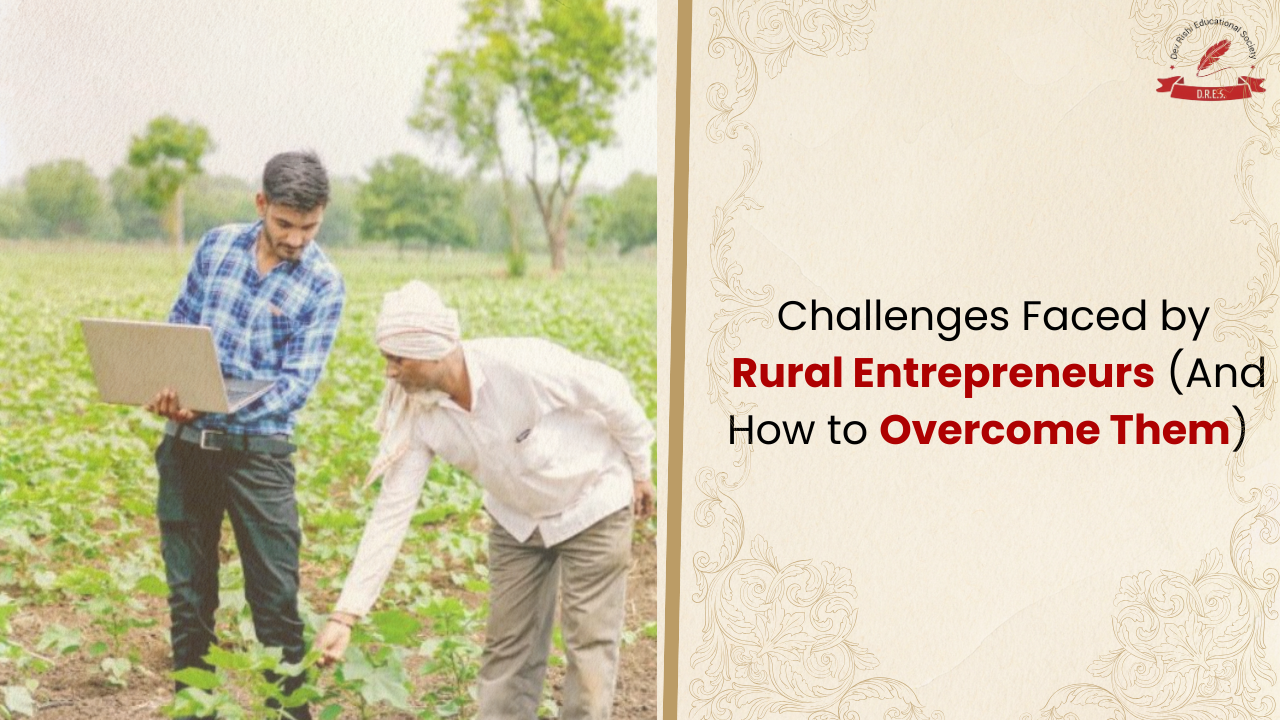
Challenges Faced by Rural Entrepreneurs in India (And How to Overcome Them)
Introduction
Rural entrepreneurship is increasingly recognized as a key driver of economic growth and livelihood generation in India. Across villages and small towns, individuals are starting businesses based on local skills, resources, and market needs.
However, while the potential is immense, the journey of a rural entrepreneur is often filled with challenges. From limited access to finance to lack of market exposure, these barriers can slow down or even stop promising ventures from growing.
Understanding these challenges and identifying practical solutions is essential to building a strong rural entrepreneurial ecosystem.
Understanding the Rural Entrepreneurship Landscape
Rural entrepreneurs operate in a unique environment shaped by local conditions, traditional practices, and limited infrastructure. Unlike urban startups, they often rely on small-scale operations and community-based models.Common sectors include:
≈ Handicrafts and artisan work
≈ Food processing and small manufacturing
≈ Retail and service-based activities
≈ Agro-based enterprises
These ventures are crucial for generating employment and strengthening local economies.
Key Challenges Faced by Rural Entrepreneurs
1. Limited Access to Finance
One of the biggest barriers is the lack of access to affordable credit. Many entrepreneurs struggle to secure loans due to lack of collateral or formal financial history.
Solution:
Promoting financial inclusion, strengthening SHG-bank linkages, and expanding microfinance options can improve access to capital.
2. Lack of Market Access
Even when products are created, reaching the right market remains a challenge. Limited exposure to buyers and pricing knowledge affects income potential.
Solution:
Creating strong market linkages through exhibitions, fairs, digital platforms, and institutional buyers can significantly improve sales opportunities.
3. Skill Gaps in Business Management
Many rural entrepreneurs have technical skills but lack knowledge in areas such as pricing, marketing, inventory management, and customer handling.
Solution:
Providing structured entrepreneurship training and mentorship helps build essential business skills.
4. Infrastructure Constraints
Poor connectivity, lack of storage facilities, and limited access to technology can hinder business growth.
Solution:
Investments in rural infrastructure and access to basic digital tools can improve efficiency and scalability.
5. Limited Awareness of Opportunities
Many potential entrepreneurs are not aware of available schemes, training programs, or market opportunities.
Solution:
Awareness campaigns and community outreach initiatives can help individuals access relevant resources and support systems.
6. Social and Cultural Barriers
In some regions, social norms may restrict participation in entrepreneurship, especially for women.
Solution:
Encouraging community-based models such as SHGs and promoting success stories can help break these barriers.
Importance of Structured Support Systems
Rural entrepreneurship cannot grow in isolation. It requires a support ecosystem that includes:
❖ Training and skill development
❖ Access to finance
❖ Market linkage
❖ Mentorship and guidance
When these elements come together, they create a strong foundation for sustainable enterprise growth.
Role of Technology in Overcoming Challenges
Digital tools are increasingly playing a role in transforming rural businesses. From online marketplaces to mobile-based payment systems, technology is helping entrepreneurs expand their reach and improve operations.Encouraging digital literacy and access can significantly enhance business opportunities.
Impact of Overcoming These Challenges
When rural entrepreneurs are supported effectively, the benefits extend beyond individual success:
⇒ Job creation within communities
⇒ Strengthening of local economies
⇒ Reduction in migration
⇒ Increased financial independence
These outcomes contribute to long-term rural development.
The Way Forward
To build a stronger rural entrepreneurial ecosystem, it is important to:
¶ Strengthen financial inclusion
¶ Expand incubation and mentoring support
¶ Improve infrastructure and connectivity
¶ Promote digital adoption
¶ Encourage institutional collaboration
A coordinated approach can unlock the full potential of rural entrepreneurship.
Conclusion
Rural entrepreneurs are not just business owners; they are drivers of grassroots economic transformation. While challenges exist, they are not insurmountable. With the right support systems, these individuals can build sustainable enterprises and contribute significantly to local development.
Field experiences increasingly indicate that structured interventions, continuous mentoring, and market-oriented approaches make a critical difference. Initiatives supported by organizations such as Dev Rishi Educational Society (DRES) reflect how rural entrepreneurship can be strengthened to create long-term income opportunities and resilient community economies.