

How Saras Mahotsav Supports
Rural Livelihoods and Artisans in India
Introduction
Across India, rural artisans and small-scale producers possess immense skill and creativity. However, one of the biggest challenges they face is access to markets. Without proper platforms to showcase and sell their products, their potential often remains underutilized.
Saras Mahotsav has emerged as an important initiative that bridges this gap.
By providing a structured platform for artisans, Self-Help Groups (SHGs), and rural entrepreneurs, it connects local talent with wider markets, enabling sustainable livelihood opportunities.
What is Saras Mahotsav?
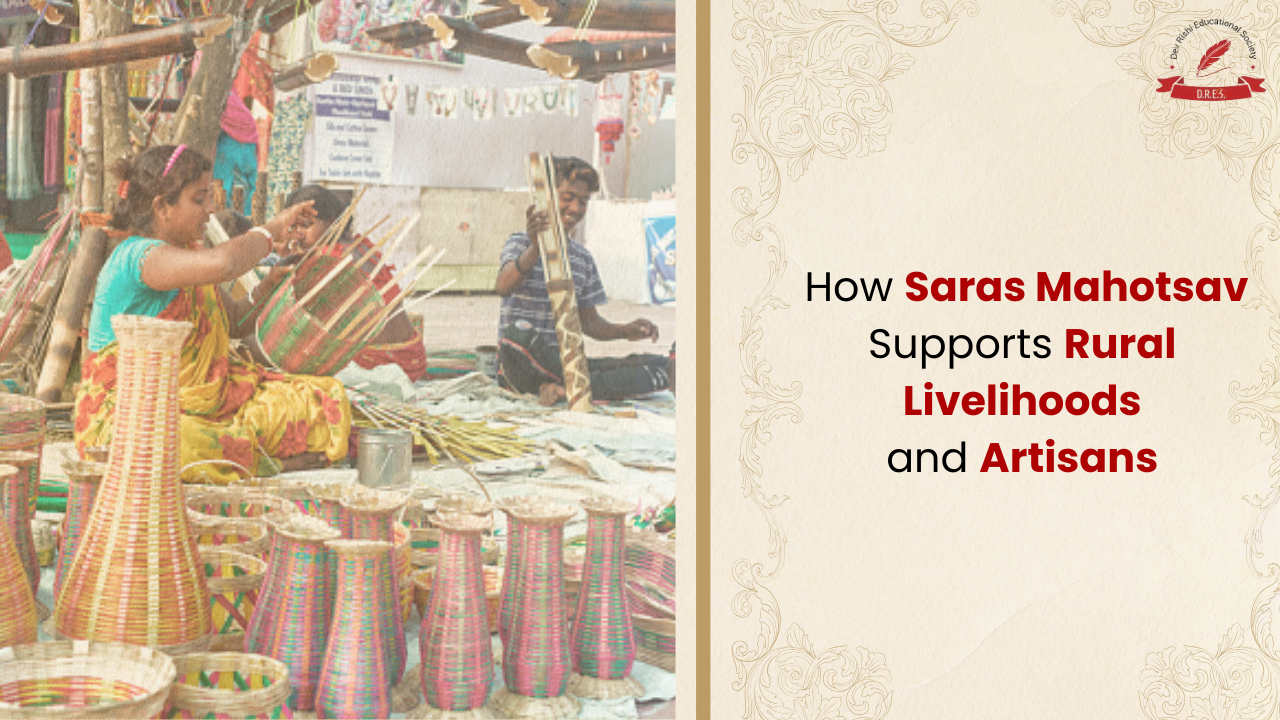
Saras Mahotsav is a large-scale exhibition and fair organized to promote rural products, crafts, and enterprises. It brings together artisans, SHGs, and entrepreneurs from different regions and provides them with direct access to consumers.
Key features include:
✾ Exhibition stalls for rural products
✾ Participation of SHGs and artisan groups
✾ Cultural performances and community engagement
✾ Direct buyer-seller interaction
It is both an economic and cultural platform.
Importance of Market Access for Rural Artisans
One of the biggest barriers for rural producers is the lack of direct market access. Middlemen often reduce profit margins, and limited exposure restricts growth.Platforms like Saras Mahotsav help by:
⟣ Eliminating intermediaries
⟣ Allowing direct sales to consumers
⟣ Increasing visibility of products
⟣ Providing better pricing opportunitiesThis significantly improves income potential.
Supporting Self-Help Groups and Local Enterprises
Saras Mahotsav plays a crucial role in strengthening SHGs and small enterprises.It enables them to:
⟦ Showcase their products at a larger scale
⟦ Gain experience in managing sales and customers
⟦ Build confidence and entrepreneurial skills
⟦ Expand their business networksSuch exposure helps SHGs transition into sustainable enterprises.
Promotion of Traditional Crafts and Skills
India has a rich heritage of traditional crafts. However, many of these skills are at risk due to lack of demand and modernization.Saras Mahotsav helps preserve these traditions by:
⟪ Promoting indigenous products
⟪ Creating demand for handmade goods
⟪ Encouraging artisans to continue their craftThis contributes to cultural preservation alongside economic development.
Economic Impact on Rural Communities
The impact of such platforms extends beyond individual participants.Key benefits include:
⬣ Increased household income
⬣ Generation of local employment
⬣ Strengthening of rural economies
⬣ Encouragement of entrepreneurshipWhen artisans succeed, entire communities benefit.
Exposure to Market Trends
Participation in large-scale events allows artisans to understand market preferences, pricing strategies, and customer expectations.This exposure helps them:
⤏ Improve product quality
⤏ Innovate designs
⤏ Adapt to changing demandMarket awareness is essential for long-term growth.
Role of Institutional Support
Organizing and managing events like Saras Mahotsav requires strong institutional support. From mobilizing participants to facilitating logistics, structured coordination is essential.Institutional involvement ensures:
⟡ Smooth execution of events
⟡ Wider participation
⟡ Better outreach and promotion
⟡ Sustainable impact
Challenges Faced by Participants
Despite its benefits, participants may face certain challenges:⨷ Limited production capacity
⨷ Lack of branding and packaging skills
⨷ Difficulty in scaling operations
⨷ Limited follow-up market access after eventsAddressing these challenges requires continuous support beyond the event.
Strengthening Impact Through Continuous Support
To maximize the benefits of Saras Mahotsav, it is important to:⧫ Provide training in business and marketing skills
⧫ Strengthen supply chains
⧫ Promote digital platforms for continued sales
⧫ Ensure post-event supportThis helps participants sustain and grow their businesses.
The Way Forward
Expanding the reach and frequency of such events can significantly enhance their impact. Integrating them with digital platforms and institutional support systems can further strengthen rural entrepreneurship.A combined approach of physical and digital marketplaces can create long-term opportunities.
Conclusion
Saras Mahotsav plays a vital role in supporting rural livelihoods by providing a platform for artisans and SHGs to connect with larger markets. It not only boosts income but also promotes cultural heritage and entrepreneurship.
Field experiences consistently highlight that when such platforms are combined with structured support and capacity-building initiatives, their impact multiplies significantly.
Efforts facilitated through organizations such as Dev Rishi Educational Society (DRES) reflect how coordinated implementation of exhibitions and outreach platforms can strengthen rural enterprises and create sustainable livelihood opportunities.
How Public Platforms Improve Market
Access for Rural Communities in India
Introduction
Rural communities across India produce a wide range of goods, from handicrafts and textiles to food products and agricultural items. However, one of the most persistent challenges they face is limited access to markets.
Without proper channels to sell their products, income potential remains restricted.
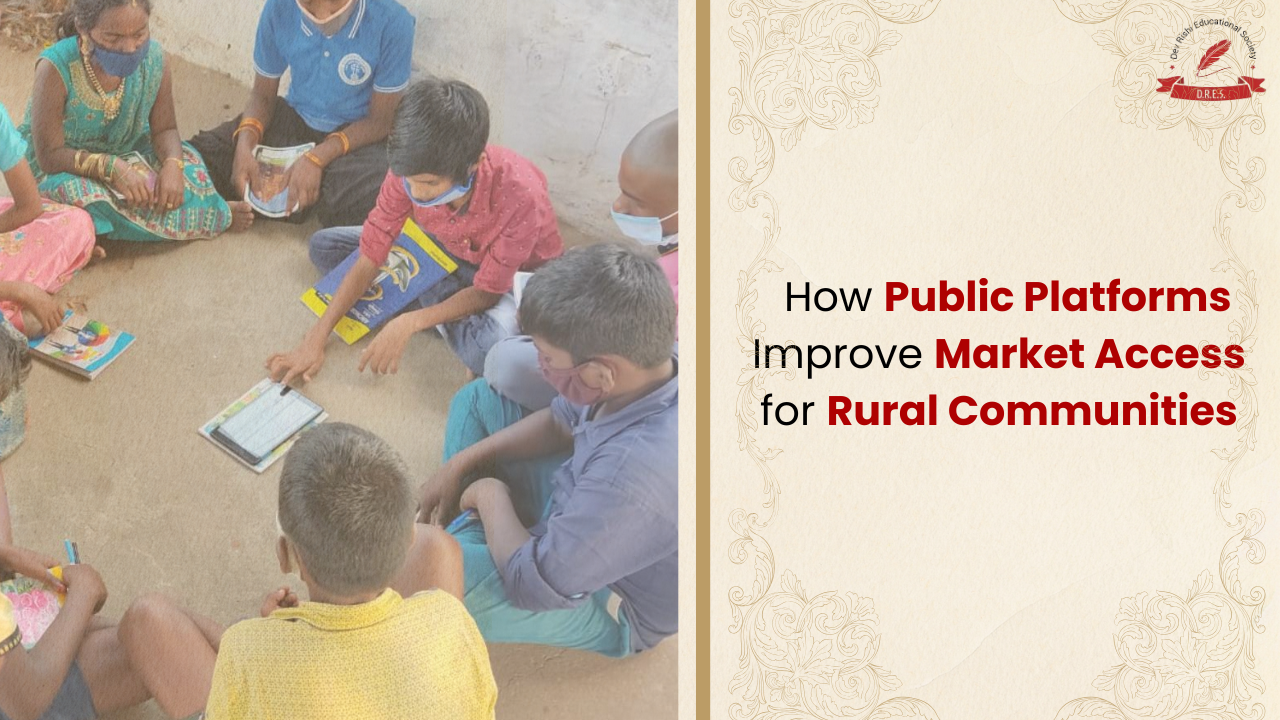
Public platforms such as exhibitions, fairs, and community marketplaces play a crucial role in addressing this gap. They connect producers directly with consumers, creating opportunities for economic growth and sustainable livelihoods.
Understanding Market Access Challenges
Market access refers to the ability of producers to reach buyers and sell their products at fair prices. In rural areas, this is often limited due to:
✹ Lack of direct connections with buyers
✹ Dependence on intermediaries
✹ Limited awareness of market demand
✹ Poor transportation and logistics
These challenges reduce profitability and hinder business growth.
What Are Public Platforms?
Public platforms are organized spaces where rural producers can showcase and sell their products. These include:
⬠ Exhibitions and fairs
⬠ Local and regional markets
⬠ Government-supported events
⬠ Community-based sales platforms
They provide visibility and access that rural producers may not achieve independently.
How Public Platforms Improve Market Access Direct Buyer-Seller Interaction
Public platforms eliminate intermediaries, allowing producers to interact directly with customers.
This ensures better pricing and higher income.
Increased Visibility: Participation in public events exposes products to a wider audience, increasing demand and recognition.
Market Expansion: Producers can move beyond local markets and reach regional or even national customers.
Immediate Sales Opportunities: Events provide instant income through direct sales, helping improve cash flow.
Role in Strengthening Rural Enterprises
Public platforms help transform small-scale producers into structured enterprises by:
⟢ Encouraging consistent production
⟢ Improving product quality
⟢ Building business confidence
⟢ Expanding customer networks
They act as growth catalysts for rural businesses.
Supporting Women and Community Groups
Many participants in public platforms are women-led Self-Help Groups.
These platforms enable them to:
⟐ Earn independent income
⟐ Gain exposure to business environments
⟐ Build confidence and leadership skills
This contributes to both economic and social empowerment.
Exposure to Market Trends and Consumer Behavior
Public platforms provide valuable insights into:
⟡ Customer preferences
⟡ Pricing strategies
⟡ Product demand
⟡ Packaging and presentation
This knowledge helps producers improve their offerings and remain competitive.
Challenges in Utilizing Public Platforms
While beneficial, certain challenges remain:
⨵ Limited production capacity
⨵ Lack of branding and packaging skills
⨵ Inconsistent participation in events
⨵ Limited follow-up market opportunities
Addressing these challenges is key to maximizing impact.
Importance of Continuous Market Linkages
For long-term success, public platforms should not be one-time opportunities. Continuous market linkages are essential. This can be achieved through:
⤶ Regular participation in events
⤶ Connecting producers with institutional buyers
⤶ Integrating digital marketplaces
⤶ Strengthening supply chains
Sustained access ensures stable income.
Role of Institutional Support
Institutional support is crucial in organizing and managing public platforms. It helps in:
⧉ Mobilizing participants
⧉ Providing training and guidance
⧉ Ensuring effective event execution
⧉ Creating long-term market linkages
Structured support enhances the overall effectiveness of these platforms.
Impact on Rural Economy
Public platforms contribute significantly to rural development by:
✺ Increasing income levels
✺ Promoting entrepreneurship
✺ Generating employment
✺ Strengthening local economies
They create a ripple effect that benefits entire communities.
The Way Forward
To enhance the impact of public platforms, it is important to:
⧗ Expand their reach and frequency
⧗ Integrate online and offline markets
⧗ Provide skill development in marketing and branding
⧗ Strengthen institutional collaborations
A comprehensive approach can unlock greater opportunities.
Conclusion
Public platforms play a vital role in improving market access for rural communities. By connecting producers with buyers, they create opportunities for income generation, business growth, and economic empowerment. Field experiences increasingly highlight that when public platforms are supported with structured training and sustained market linkages, their impact becomes more meaningful.
Initiatives facilitated through organizations such as Dev Rishi Educational Society (DRES) reflect how coordinated efforts can strengthen market access and enable rural communities to build sustainable livelihoods.
How Awareness Campaigns Drive Community Participation in Development Programs
Introduction
Development programmes are most effective when communities actively participate in them.
While infrastructure, policies, and resources play an important role, real impact is achieved only when people understand, accept, and contribute to these initiatives.
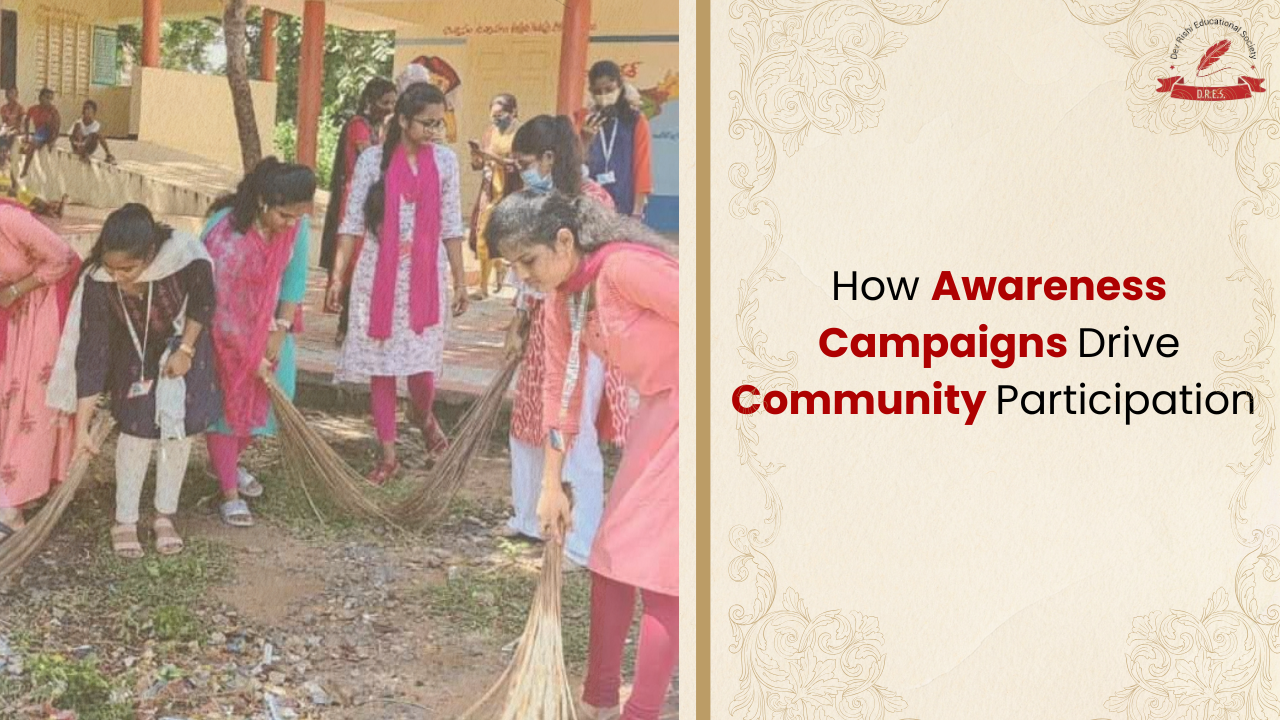
Awareness campaigns serve as a crucial link between development programmes and community engagement. They inform, educate, and motivate individuals to become active participants rather than passive beneficiaries.
What Are Awareness Campaigns?
Awareness campaigns are structured efforts aimed at informing communities about specific issues, programmes, or practices. These campaigns use various communication methods to reach people at different levels.
They typically include:
✧ Community meetings and group discussions
✧ Door-to-door outreach
✧ Workshops and training sessions
✧ Visual and audio communication tools
The goal is to create understanding and encourage action.
Why Community Participation Matters
Community participation ensures that development initiatives are relevant, accepted, and sustainable.
Benefits include:
⬡ Better identification of local needs
⬡ Increased ownership of programmes
⬡ Improved implementation outcomes
⬡ Long-term sustainability
When communities are involved, development becomes more effective.
How Awareness Campaigns Encourage Participation Building Understanding
Awareness campaigns help people understand the purpose and benefits of development programmes. When individuals see how initiatives can improve their lives, they are more likely to participate.
1. Changing Attitudes and Perceptions: Many development challenges are linked to mindset and behavior. Awareness campaigns address misconceptions and encourage positive attitudes.
2. Promoting Behavioral Change: Campaigns often focus on encouraging specific actions, such as adopting hygiene practices, participating in training programmes, or using government services.
3. Strengthening Trust: Regular interaction with communities builds trust between institutions and people. Trust is essential for participation.
Role of Local Communication Methods
Effective awareness campaigns use communication methods that are relevant to local contexts.
These include:
⟟ Local language communication
⟟ Cultural events and activities
⟟ Visual demonstrations
⟟ Peer-to-peer communication
Localized approaches improve reach and impact.
Importance of Consistency
One-time campaigns are rarely effective in driving lasting change. Consistent and repeated messaging is necessary to reinforce awareness and encourage sustained participation.
Continuous engagement helps:
⟳ Strengthen understanding
⟳ Build habits
⟳ Maintain interest
Role of Community Leaders
Local leaders and influencers play a key role in awareness campaigns. Their involvement helps:
⟠ Increase credibility of messages
⟠ Encourage wider participation
⟠ Facilitate communication within communities
Engaging leaders strengthens outreach efforts.
Challenges in Awareness Campaigns
Despite their importance, awareness campaigns face several challenges:
⨺ Limited reach in remote areas
⨺ Resistance to change
⨺ Language and communication barriers
⨺ Lack of follow-up
Addressing these challenges requires innovative and adaptive strategies.
Measuring the Impact of Awareness Campaigns
The success of awareness campaigns can be assessed through:
⌁ Increased participation in programmes
⌁ Improved adoption of practices
⌁ Positive behavioral changes
⌁ Feedback from communities
Monitoring helps refine future campaigns.
Impact on Development Outcomes
Effective awareness campaigns lead to:
✸ Higher community engagement
✸ Better programme implementation
✸ Increased adoption of beneficial practices
✸ Stronger and more resilient communities
Participation transforms development from a top-down process into a collaborative effort.
The Way Forward
To enhance the effectiveness of awareness campaigns, it is important to:
⧁ Use diverse communication methods
⧁ Integrate campaigns with development programmes
⧁ Strengthen community involvement
⧁ Ensure continuous engagement
⧁ Leverage digital platforms for wider reach
A strategic approach can significantly improve outcomes.
Conclusion
Awareness campaigns play a vital role in driving community participation and ensuring the success of development programmes. By building understanding, influencing behavior, and fostering trust, they create a strong foundation for sustainable impact. Field experiences consistently highlight that when awareness efforts are structured, continuous, and community-driven, participation levels increase significantly.
Initiatives supported by organizations such as Dev Rishi Educational Society (DRES) reflect how well-designed awareness campaigns can mobilize communities, strengthen programme outcomes, and contribute to long-term development.
Role of Exhibitions in Promoting
SHGs and Local Enterprises
Introduction
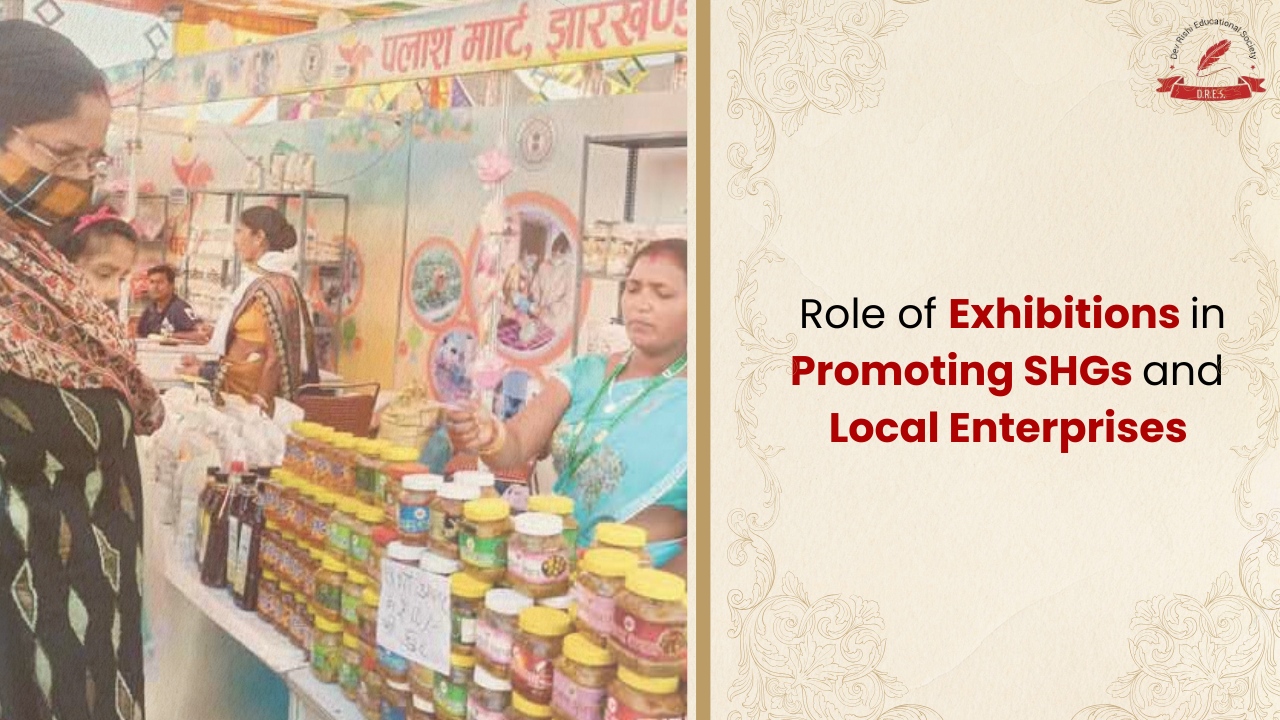
Exhibitions play a vital role in providing a platform for Self-Help Groups (SHGs) and local enterprises to showcase their products and skills.
In many rural and semi-urban areas, these groups produce high-quality goods but often lack market access and visibility.
Exhibitions help bridge this gap by connecting producers directly with customers, creating opportunities for growth, income generation, and recognition.
Understanding SHGs and Local Enterprises
Self-Help Groups and local enterprises are community-based initiatives that promote economic empowerment.
✤ Small groups working towards financial independence
✤ Focus on skill-based production and services
✤ Encourage savings and entrepreneurship
✤ Support women-led and community-driven initiatives
These groups play a crucial role in strengthening rural economies.
Importance of Exhibitions for SHGs
Exhibitions provide direct exposure and opportunities that are otherwise difficult to access.
⬢ Direct interaction with customers
⬢ Opportunity to showcase unique products
⬢ Better understanding of market demand
⬢ Building confidence among members
They act as a stepping stone toward larger business opportunities.
Enhancing Market Access
One of the biggest challenges for SHGs is limited market reach. Exhibitions help overcome this barrier.
⟰ Connect producers with wider audiences
⟰ Eliminate middlemen in many cases
⟰ Enable better pricing and profits
⟰ Create opportunities for bulk orders
This improves income stability for local entrepreneurs.
Promoting Local Products and Culture
Exhibitions highlight the richness of local craftsmanship and traditions.
⟬ Showcasing handmade and traditional products
⟬ Preserving cultural heritage
⟬ Encouraging local identity and pride
⟬ Promoting eco-friendly and sustainable goods
This helps in building a unique market position for local products.
Role in Skill Development and Learning
Exhibitions are not just about selling but also about learning and growth.
⟢ Exposure to new ideas and trends
⟢ Learning packaging and presentation skills
⟢ Understanding customer preferences
⟢ Improving communication and marketing skills
Participants gain valuable insights to improve their businesses.
Women Empowerment through Exhibitions
Many SHGs are women-led, and exhibitions provide them with opportunities for empowerment.
⬡ Financial independence for women
⬡ Increased confidence and decision-making ability
⬡ Recognition of their skills and efforts
⬡ Social empowerment within communities
This contributes to overall community development.
Challenges Faced in Exhibitions
Despite the benefits, there are certain challenges.
⨺ Limited resources for participation
⨺ Lack of proper marketing and promotion
⨺ Competition with established brands
⨺ Logistical and transportation issues
Addressing these challenges can improve participation and outcomes.
Role of NGOs and Government Support
Support from NGOs and government bodies enhances the effectiveness of exhibitions.
⧆ Organizing and facilitating exhibition events
⧆ Providing training and guidance
⧆ Offering financial and logistical support
⧆ Promoting participation at larger platforms
Their involvement ensures better reach and sustainability.
Long-Term Impact of Exhibitions
Exhibitions create lasting benefits for SHGs and local enterprises.
✷ Increased income and livelihood opportunities
✷ Business expansion and networking
✷ Improved product quality and innovation
✷ Strengthened local economies
These impacts contribute to sustainable development.
The Way Forward
To maximize the benefits of exhibitions:
⟐ Increase frequency of such events
⟐ Improve marketing and promotion strategies
⟐ Provide training in branding and packaging
⟐ Encourage digital and online exhibitions
⟐ Strengthen institutional support
A strategic approach can unlock greater potential.
Conclusion
Exhibitions serve as a powerful platform for promoting SHGs and local enterprises. They not only provide market access but also build confidence, skills, and recognition among participants.
With continuous support and structured efforts, exhibitions can significantly contribute to economic empowerment and sustainable development at the grassroots level.
Behind the Scenes of Organizing
Large-Scale Development Events
Introduction
Large-scale development events play a crucial role in bringing together communities, stakeholders, and organizations to create awareness, share knowledge, and drive impact.
While these events appear seamless to participants, a significant amount of planning and coordination happens behind the scenes.
From logistics to communication, organizing such events requires strategic execution and teamwork to ensure successful outcomes.

Understanding Large-Scale Development Events
Development events are organized to address social, economic, and community issues at a broader level.
✥ Focus on awareness, training, and engagement
✥ Involve multiple stakeholders and participants
✥ Aim to create measurable impact
✥ Often include workshops, exhibitions, and outreach programs
These events act as platforms for collaboration and change.
Planning and Preparation
Successful events begin with detailed planning.
⬣ Defining clear objectives and goals
⬣ Identifying target audience and stakeholders
⬣ Selecting appropriate venue and date
⬣ Preparing schedules and activity plans
⬣ Allocating roles and responsibilities
Proper planning ensures smooth execution.
Coordination and Teamwork
Team coordination is essential for managing large-scale events.
⟴ Collaboration among different teams
⟴ Clear communication channels
⟴ Delegation of tasks and responsibilities
⟴ Regular monitoring and updates
⟴ Quick problem-solving during execution
Strong teamwork keeps operations aligned.
Logistics and Resource Management
Managing logistics is one of the most critical aspects.
⟢ Arranging venue setup and infrastructure
⟢ Managing equipment and materials
⟢ Coordinating transportation and accommodation
⟢ Ensuring availability of basic facilities
⟢ Handling on-ground operations
Efficient logistics directly impact the success of the event.
Role of Communication and Promotion
Effective communication ensures maximum participation and engagement.
⟡ Promoting the event through various channels
⟡ Engaging communities and stakeholders
⟡ Providing clear information and updates
⟡ Using local language for better outreach
⟡ Managing on-ground announcements and coordination
Good communication increases reach and impact.
Challenges in Organizing Large-Scale Events
Organizing such events comes with multiple challenges.
⨻ Managing large crowds and participation
⨻ Handling unexpected delays or issues
⨻ Limited resources and budget constraints
⨻ Coordination across multiple teams
⨻ Ensuring safety and smooth execution
Overcoming these challenges requires flexibility and planning.
Role of NGOs and Institutions
NGOs and institutions play a key role in organizing and executing development events.
⧫ Providing expertise and guidance
⧫ Mobilizing communities
⧫ Ensuring effective implementation
⧫ Monitoring outcomes and impact
⧫ Building partnerships with stakeholders
Their involvement ensures structured and meaningful execution.
Impact of Well-Organized Events
When executed effectively, these events create lasting impact.
✺ Increased awareness among communities
✺ Knowledge sharing and skill development
✺ Strengthened community participation
✺ Improved collaboration between stakeholders
✺ Long-term development outcomes
These events contribute to sustainable progress.
The Way Forward
To improve the effectiveness of development events:
⧗ Focus on better planning and coordination
⧗ Use technology for management and promotion
⧗ Strengthen stakeholder engagement
⧗ Ensure continuous monitoring and feedback
⧗ Encourage community participation
A structured approach enhances efficiency and impact.
Conclusion
Organizing large-scale development events requires careful planning, strong teamwork, and efficient execution. While the visible success of an event is important, the real effort lies behind the scenes.
With proper coordination, communication, and community involvement, such events can create meaningful change and contribute to long-term development goals.