
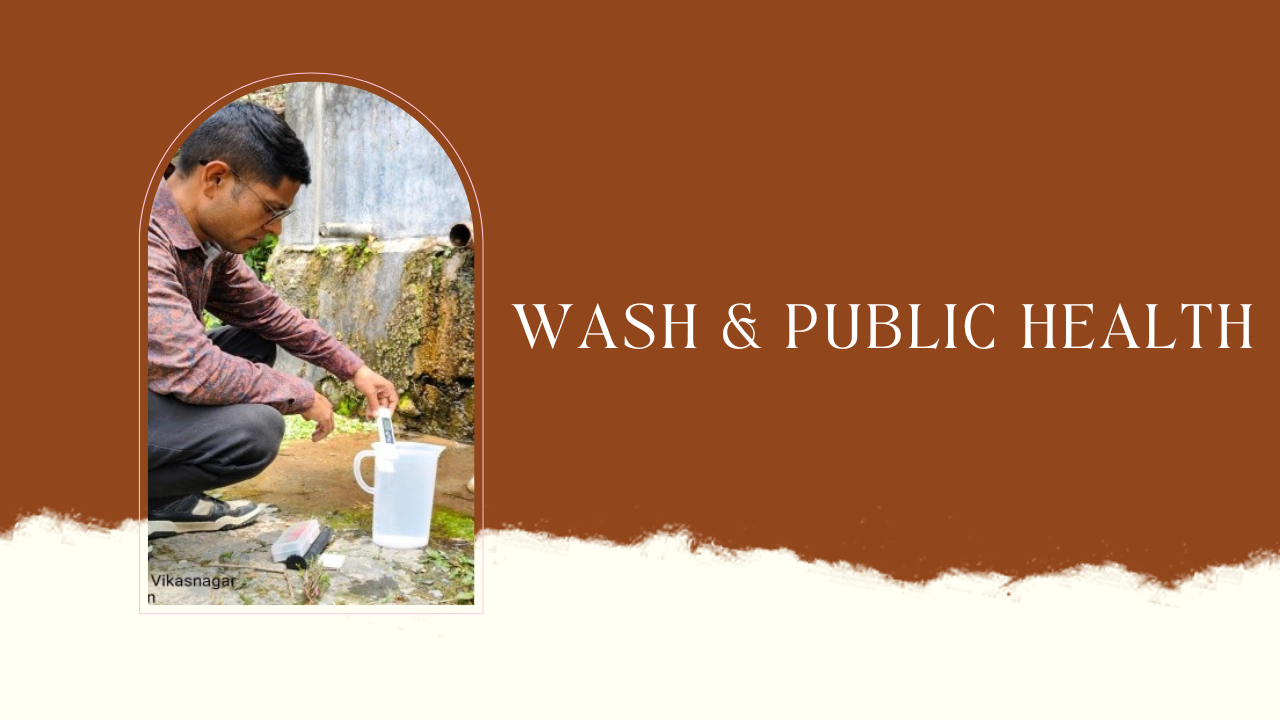
Why Water, Sanitation and Hygiene (WASH) Programs Are Essential in India
Introduction
Access to clean water, proper sanitation, and basic hygiene is fundamental to human health and dignity. Yet, for millions of people across India, especially in rural and underserved regions, these basic necessities are still not consistently available.
Water, Sanitation and Hygiene, commonly referred to as WASH, plays a critical role in improving public health, reducing disease, and enhancing overall quality of life.
Over the years, WASH programs have become a key focus area in development initiatives aimed at creating sustainable and healthy communities.
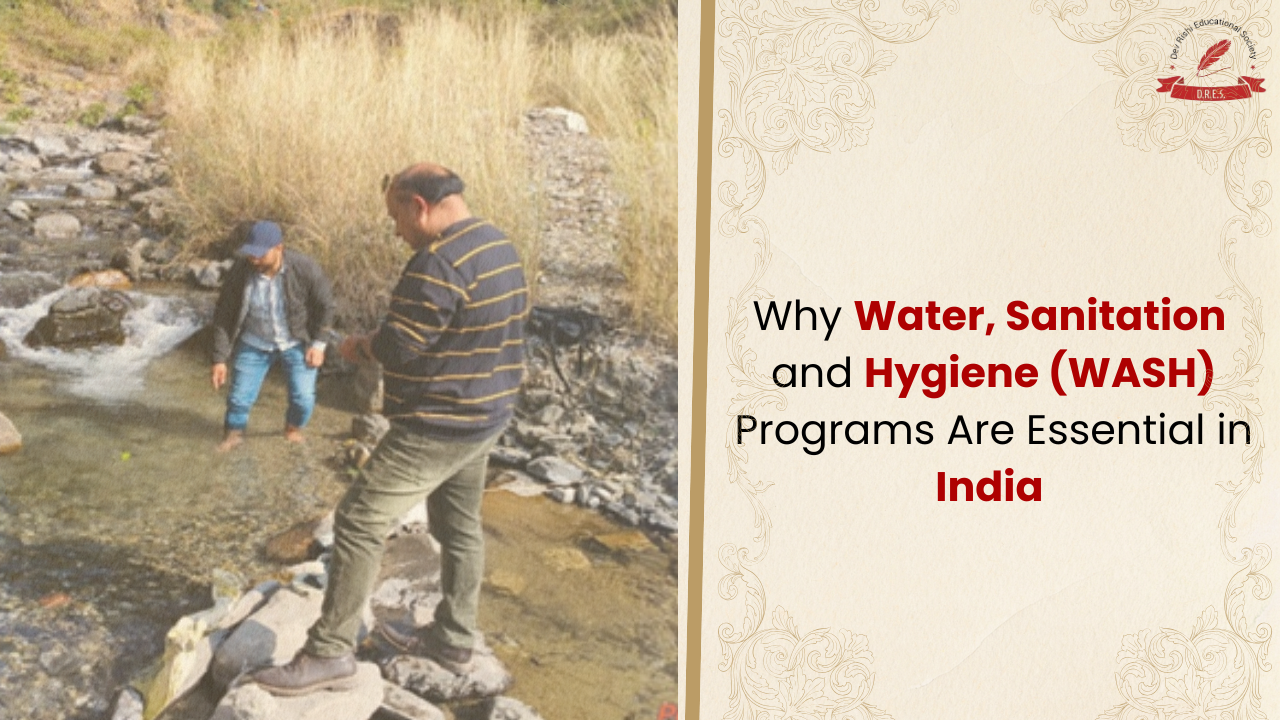
Understanding WASH
WASH stands for Water, Sanitation, and Hygiene. It represents a comprehensive approach to improving public health through:
‡ Access to safe and clean drinking water
‡ Availability of proper sanitation facilities
‡ Promotion of hygiene practices such as handwashing
These three components are interconnected and must function together to create lasting impact.
Why WASH Programs Are Critical in India
India has made significant progress in improving sanitation and water access, yet challenges remain, particularly in rural and remote areas.
1. Prevention of Waterborne Diseases
Unsafe water and poor sanitation contribute to diseases such as diarrhea, cholera, and typhoid. WASH programs help reduce these risks by improving access and awareness.
2. Improvement in Public Health
Better hygiene practices lead to healthier communities, reducing the burden on healthcare systems.
3. Impact on Children and Education
Lack of sanitation facilities in schools affects attendance, especially among girls. WASH interventions improve school participation and learning outcomes.
4. Dignity and Quality of Life
Access to sanitation is closely linked to dignity, safety, and well-being, particularly for women and vulnerable groups.
Role of Sanitation in Community Development
Sanitation is more than just infrastructure. It is about behavior change and sustained usage.
Building toilets alone is not enough. Communities must be aware of the importance of using them consistently and maintaining hygiene practices. This is where awareness campaigns and community engagement become essential.
Importance of Safe Drinking Water
Access to safe drinking water is a basic requirement for survival. In many regions, water sources may be contaminated, leading to serious health issues.
◎ WASH programs focus on:
◎ Ensuring clean water supply systems
◎ Promoting safe storage and usage
◎ Training communities on water management
These efforts significantly improve health outcomes.
Hygiene Practices and Behavioral Change
Hygiene is often the most overlooked aspect of WASH. Simple practices such as handwashing with soap can prevent a large number of diseases.However, changing habits requires consistent awareness and education. Behavioral change communication plays a crucial role in encouraging communities to adopt better hygiene practices.
Government Initiatives Supporting WASH
India has launched several initiatives to improve water and sanitation conditions, including:
Swachh Bharat Mission
Jal Jeevan Mission
These programs aim to provide universal access to sanitation and clean drinking water, supported by awareness campaigns and infrastructure development.
Challenges in Implementing WASH Programs
Despite progress, several challenges persist:
Behavioral resistance to change
Maintenance of sanitation infrastructure
Water scarcity in certain regions
Lack of awareness in remote areas
Addressing these requires continuous engagement and community participation.
Importance of Community Participation
WASH programs are most effective when communities actively participate in planning and implementation.
Community involvement ensures:
✫ Better adoption of practices
✫ Ownership of infrastructure
✫ Long-term sustainability
Without participation, even well-designed programs may fail to deliver lasting impact.
Long-Term Impact of WASH Programs
Effective WASH initiatives contribute to:
➥ Reduced disease burden
➥ Improved quality of life
➥ Increased productivity
➥ Better educational outcomes
Over time, these improvements lead to stronger and healthier communities.
Conclusion
WASH programs are essential for building a healthier and more sustainable society. By addressing the fundamental needs of water, sanitation, and hygiene, these initiatives create a strong foundation for overall development.
Across different regions, practical implementation efforts continue to highlight the importance of combining infrastructure with awareness and community engagement.
Experiences from organizations such as Dev Rishi Educational Society (DRES) reflect how structured WASH interventions can lead to improved public health outcomes and long-term behavioral change within communities.
How Sanitation Awareness Improves Public Health Outcomes in India
Introduction
Sanitation is often viewed as a matter of infrastructure. Toilets are built, waste systems are installed, and water facilities are developed. However, the real impact of sanitation goes far beyond physical structures. It lies in awareness, behavior, and consistent usage.In India, significant progress has been made in improving sanitation coverage.
Yet, the effectiveness of these efforts depends largely on how communities understand and adopt sanitation practices. Sanitation awareness plays a crucial role in transforming infrastructure into real public health outcomes.
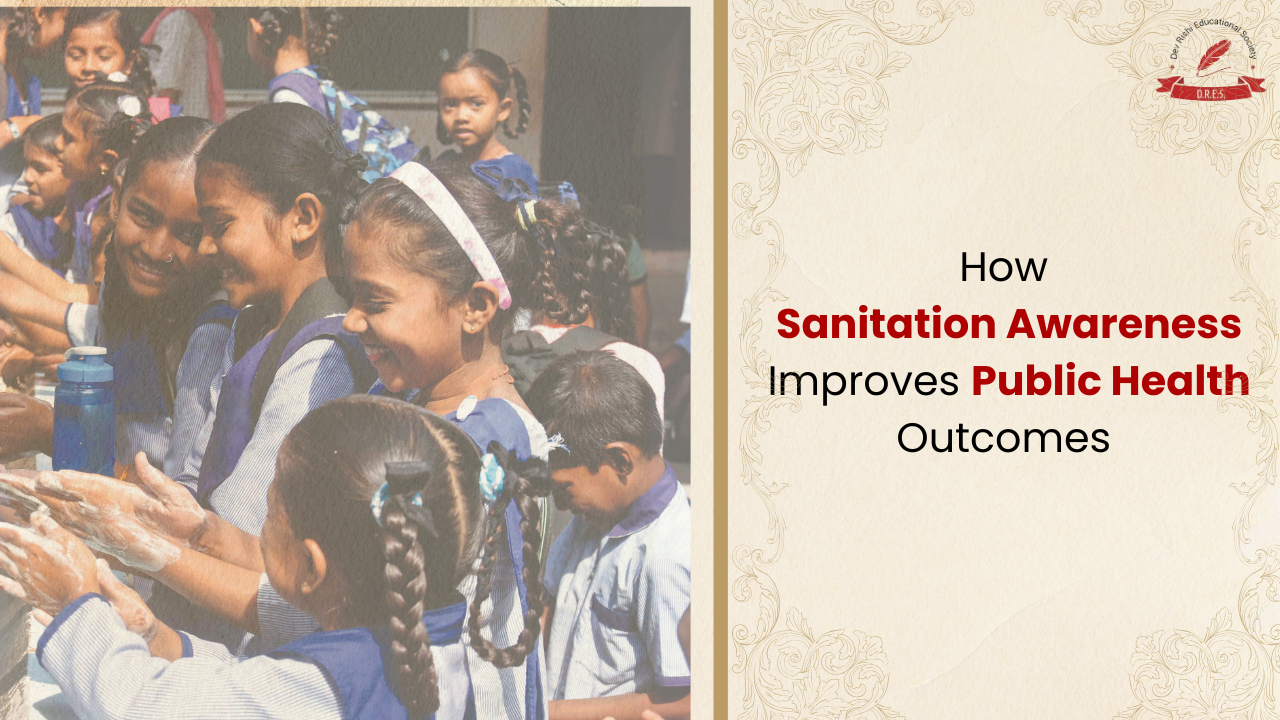
Understanding Sanitation Awareness
Sanitation awareness refers to educating individuals and communities about the importance of hygiene practices, safe waste disposal, and proper use of sanitation facilities.It includes:
➙ Awareness about using toilets consistently
➙ Understanding the importance of handwashing
➙ Safe disposal of waste
➙ Maintaining cleanliness in surroundings
Without awareness, even the best infrastructure may remain underutilized or misused.
Link Between Sanitation and Public Health
Poor sanitation is directly linked to the spread of diseases. Contaminated water, open defecation, and improper waste disposal create conditions for infections to spread rapidly.Common health issues linked to poor sanitation include:
Diarrheal diseases | Cholera | Typhoid | Intestinal infections
Improving sanitation awareness helps break this cycle by encouraging safer practices.
Why Awareness is More Important Than Infrastructure
Infrastructure provides access, but awareness ensures usage. Many sanitation initiatives face challenges not because facilities are absent, but because behavioral adoption is limited.
Key reasons include:
◍ Lack of understanding about health risks
◍ Cultural habits and long-standing practices
◍ Limited exposure to hygiene education
Addressing these requires consistent communication and community engagement.
Role of Behavioral Change Communication
Behavioral change communication is at the core of sanitation awareness. It focuses on influencing habits and encouraging long-term adoption of better practices.
Effective strategies include:
Community meetings and group discussions
Demonstrations and practical sessions
School-based awareness programs
Visual and audio communication tools
These approaches help translate knowledge into action.
Impact on Children and Families
Sanitation awareness has a direct impact on children’s health and development. Poor hygiene practices increase the risk of infections, affecting nutrition and growth.
When families adopt better sanitation habits:
⇲ Children fall sick less frequently
⇲ School attendance improves
⇲ Healthcare expenses reduce
This creates a healthier environment for overall development.
Role of Schools in Promoting Sanitation
Schools are powerful platforms for spreading sanitation awareness. Children learn practices at school and carry them back to their homes.School-based initiatives often include:
▮ Handwashing campaigns
▮ Cleanliness drives
▮ Hygiene education sessions
These activities help build habits at an early age.
Challenges in Promoting Sanitation Awareness
Despite ongoing efforts, several challenges remain:
∵ Resistance to behavioral change
∵ Limited reach in remote areas
∵ Inconsistent follow-up
∵ Lack of trained facilitators
Overcoming these requires sustained engagement and localized approaches.
Importance of Community Involvement
Sanitation awareness is most effective when communities are actively involved. Participation creates a sense of ownership and responsibility.Community-led initiatives often result in:
✷ Better adoption of sanitation practices
✷ Improved maintenance of facilities
✷ Long-term sustainability
Engaging local leaders and groups further strengthens these efforts.
Long-Term Benefits of Sanitation Awareness
When sanitation awareness is successfully implemented, the benefits extend beyond immediate health improvements.These include:
✰ Reduced disease burden
✰ Improved productivity
✰ Better quality of life
✰ Strengthened community health systems
Over time, awareness becomes a habit, leading to lasting change.
Conclusion
Sanitation awareness is a critical component of public health improvement in India. While infrastructure provides access, it is awareness that ensures impact. By promoting better hygiene practices and encouraging behavioral change, communities can significantly reduce health risks and improve overall well-being.
Field-level initiatives increasingly show that sustained awareness efforts, combined with community engagement, create meaningful and lasting outcomes.
Work carried out by institutions such as Dev Rishi Educational Society (DRES) reflects how structured sanitation awareness programmes can translate into improved health conditions and stronger community practices over time.
Jal Jeevan Mission: Impact on
Rural Communities Explained
Introduction
Access to clean and safe drinking water has long been a challenge in many parts of rural India. For decades, communities relied on distant or unsafe water sources, leading to health risks, time burdens, and limited economic productivity.
To address this critical issue, the Government of India launched the Jal Jeevan Mission (JJM) with a clear objective: to provide functional household tap connections to every rural household.
This initiative has significantly transformed water access across the country, bringing both immediate and long-term benefits to communities.
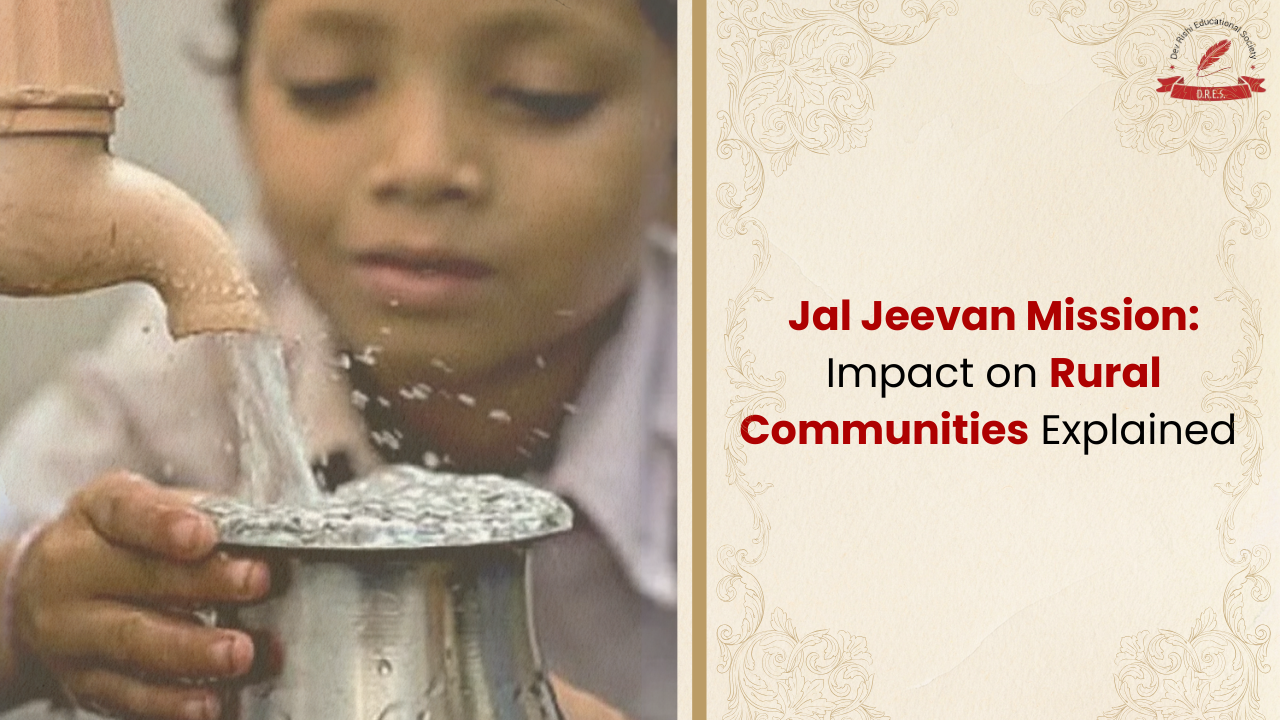
What is Jal Jeevan Mission?
Jal Jeevan Mission is a nationwide initiative aimed at ensuring that every rural household has access to safe and adequate drinking water through tap connections.Key objectives include:
⇢ Providing functional household tap connections
⇢ Ensuring regular and safe water supply
⇢ Promoting water quality monitoring
⇢ Strengthening local water management systems
The mission focuses not just on infrastructure but also on sustainability and community participation.
Challenges Before the Mission
Before the implementation of Jal Jeevan Mission, rural communities faced multiple challenges:
╣ Dependence on handpumps, wells, and surface water sources
╣ Long distances traveled to fetch water
╣ Exposure to contaminated water leading to diseases
╣ Time-consuming daily routines, especially for women
These challenges affected not only health but also education, productivity, and overall quality of life.
Key Impacts of Jal Jeevan Mission
The implementation of Jal Jeevan Mission has brought significant changes at the grassroots level.
1. Improved Access to Safe Drinking Water
Households now have access to water directly at their homes, reducing dependency on unsafe sources.
2. Better Public Health Outcomes
With access to clean water, the incidence of waterborne diseases has reduced, improving overall community health.
3. Time Savings for Women and Families
Women, who traditionally bore the responsibility of fetching water, now save time that can be used for education, livelihood activities, or household needs.
4. Increased School Attendance
Children, especially girls, are less burdened with water collection tasks, leading to improved school attendance.
5. Strengthening of Local Governance
Village-level institutions are actively involved in managing water supply systems, promoting decentralized governance.
Role of Community Participation
One of the key strengths of Jal Jeevan Mission is its focus on community involvement. Local communities are not just beneficiaries but active participants in planning, implementation, and maintenance.This includes:
∫ Formation of Village Water and Sanitation Committees
∫ Training of local stakeholders
∫ Community-based monitoring systems
Such participation ensures ownership and long-term sustainability.
Focus on Water Quality
Ensuring water quality is as important as providing access. The mission emphasizes regular testing and monitoring of water sources.Community members are trained to:
✔ Test water quality
✔ Identify contamination risks
✔ Take preventive measures
This strengthens local capacity and awareness.
Challenges in Implementation
While the mission has achieved significant progress, certain challenges remain:
◑ Maintenance of infrastructure
◑ Water source sustainability in drought-prone areas
◑ Ensuring consistent supply
◑ Technical and logistical constraints in remote regions
Addressing these challenges requires continuous monitoring and support.
Long-Term Impact on Rural Development
The impact of Jal Jeevan Mission extends beyond water access. It contributes to:
🌟 Improved health and hygiene
🌟 Increased productivity
🌟 Enhanced quality of life
🌟 Strengthening of rural infrastructure
Over time, these improvements support broader socio-economic development.
The Way Forward
To sustain the benefits of Jal Jeevan Mission, it is important to focus on:
✺ Regular maintenance of water systems
✺ Strengthening community ownership
✺ Promoting water conservation practices
✺ Integrating water management with other development initiatives
A holistic approach will ensure long-term success.
Conclusion
Jal Jeevan Mission represents a significant step toward ensuring universal access to safe drinking water in rural India. By combining infrastructure development with community participation and sustainability measures, the mission has created a strong foundation for improved living conditions.
Field-level implementation experiences continue to highlight the importance of structured support and community engagement in achieving lasting outcomes.
Efforts supported by organizations such as Dev Rishi Educational Society (DRES) demonstrate how training, awareness, and local capacity building can further strengthen water management systems and enhance the impact of such initiatives.
The Role of NGOs in Promoting
Hygiene and Preventive Healthcare in India
Introduction
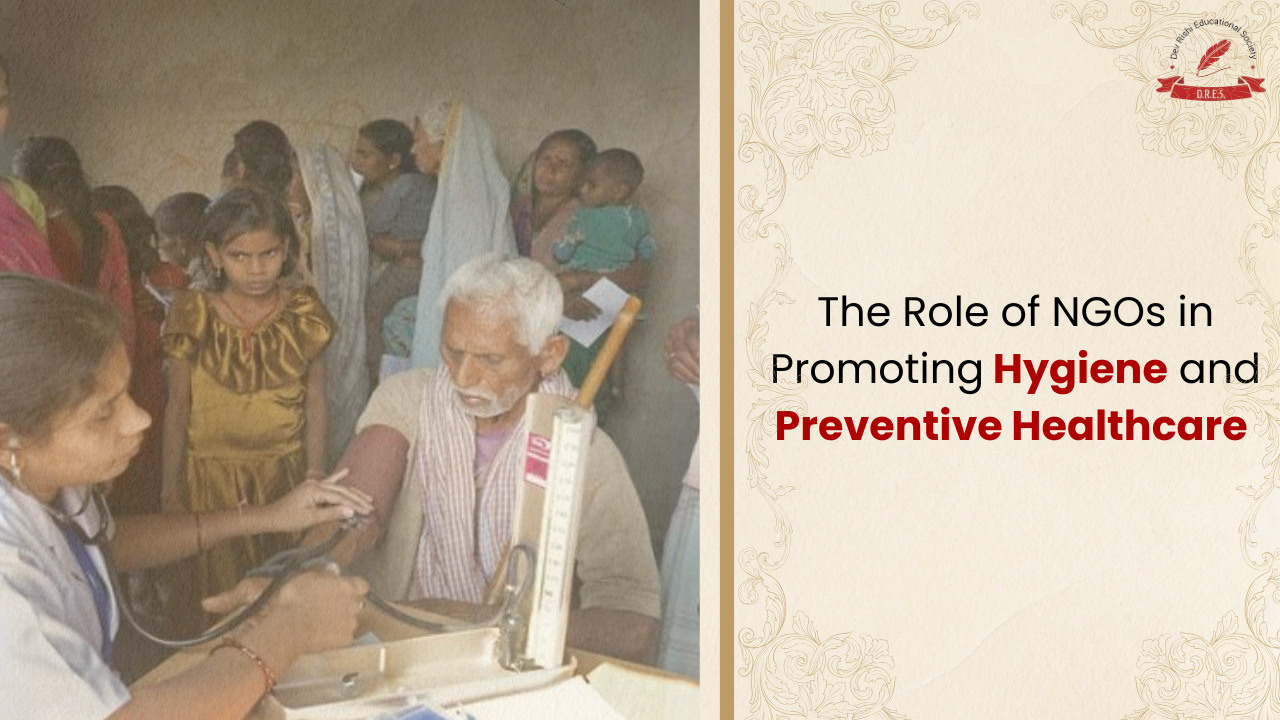
Healthcare systems are often associated with hospitals, doctors, and treatment facilities. However, a significant portion of health improvement depends not on treatment, but on prevention. Preventive healthcare focuses on reducing the risk of diseases before they occur, and hygiene plays a central role in this approach.
In India, especially in rural and underserved regions, awareness about hygiene and preventive practices is still evolving. This is where non-governmental organizations have emerged as key contributors.
By working closely with communities, NGOs play a crucial role in promoting awareness, influencing behavior, and strengthening public health systems.
Understanding Preventive Healthcare
Preventive healthcare involves measures taken to prevent diseases rather than treating them after they occur. It includes:
➥ Promoting hygiene practices
➥ Ensuring safe drinking water
➥ Encouraging proper sanitation
➥ Conducting health awareness campaigns
These efforts reduce the burden on healthcare systems and improve overall community well-being.
Why Hygiene Awareness is Essential
Hygiene is one of the simplest yet most effective ways to prevent diseases. Practices such as handwashing with soap, safe food handling, and maintaining clean surroundings can significantly reduce infection rates. However, awareness and consistent practice remain challenges in many areas. Cultural habits, lack of information, and limited exposure often prevent communities from adopting these practices.
Role of NGOs in Community-Level Engagement
NGOs play a vital role in bridging the gap between awareness and action. Their strength lies in their ability to work directly with communities and understand local challenges.
Key contributions include:
1. Awareness Campaigns
NGOs conduct community meetings, workshops, and campaigns to educate people about hygiene and health.
2. Behavioral Change Communication
Changing habits requires consistent effort. NGOs use targeted communication strategies to encourage long-term adoption of better practices.
3. School-Based Interventions
Schools are effective platforms for promoting hygiene awareness. NGOs conduct sessions and activities that help children develop healthy habits.
4. Training and Capacity Building
Local volunteers and community members are trained to continue awareness efforts, ensuring sustainability.
Strengthening Public Health Systems
NGOs often work in collaboration with government initiatives to strengthen public health systems.
They support implementation by:
⇲ Conducting field-level training
⇲ Assisting in monitoring and evaluation
⇲ Facilitating community participation
⇲ Providing technical and operational support
This collaboration enhances the effectiveness of large-scale health programs.
Focus on Vulnerable Communities
One of the key strengths of NGOs is their focus on reaching vulnerable and underserved populations. These include:
✪ Remote rural communities
✪ Low-income households
✪ Women and children
✪ Marginalized groups
By targeting these groups, NGOs help ensure inclusive health improvements.
Challenges Faced by NGOs
Despite their contributions, NGOs face several challenges:
◉ Limited resources and funding
◉ Difficulty in sustaining long-term engagement
◉ Resistance to behavioral change
◉ Logistical challenges in remote areas
Overcoming these requires strong partnerships and continuous support.
Importance of Community Participation
NGO-led initiatives are most effective when communities actively participate. Engagement creates a sense of ownership, which is essential for sustaining hygiene practices.
Community participation leads to:
➤ Better adoption of health practices
➤ Improved maintenance of facilities
➤ Long-term behavioral change
Long-Term Impact of NGO Interventions
When NGOs successfully promote hygiene and preventive healthcare, the impact is significant:
∝ Reduction in disease incidence
∝ Improved quality of life
∝ Lower healthcare expenses
∝ Stronger community health systems
These outcomes contribute to overall socio-economic development.
The Way Forward
To enhance the impact of NGOs in preventive healthcare, it is important to:Strengthen collaboration with government programs
☯ Expand outreach in remote areas
☯ Invest in training and capacity building
☯ Promote innovative communication strategies
☯ Encourage community-led initiatives
A coordinated approach can amplify results and ensure sustainability.
Conclusion
Preventive healthcare and hygiene awareness are essential for building healthier communities. While infrastructure and medical facilities are important, long-term health improvement depends on awareness and behavior.
Across different regions, NGO-led interventions continue to demonstrate the value of community engagement and structured implementation.
Work carried out by institutions such as Dev Rishi Educational Society (DRES) reflects how focused awareness programmes, combined with field-level training and participation, can strengthen hygiene practices and contribute to improved public health outcomes over time.
Behavioral Change in Sanitation: The Biggest Challenge in Rural India
Introduction
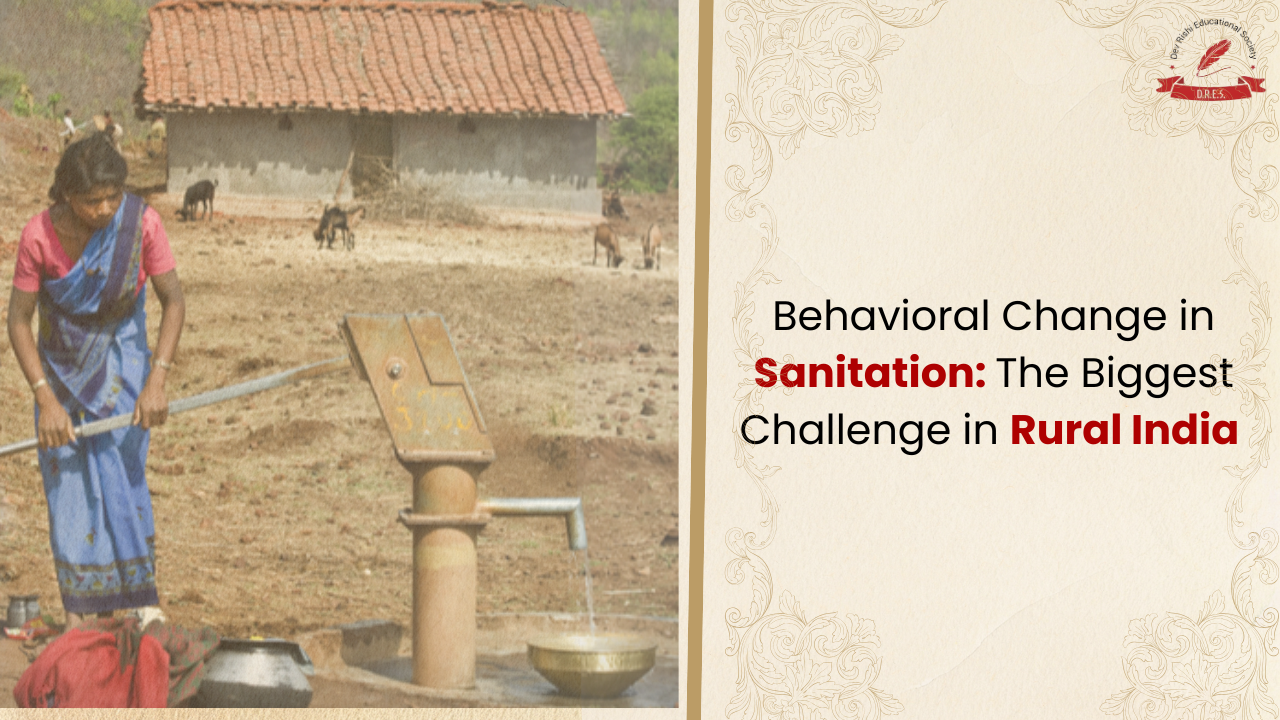
Sanitation is not just about building toilets or providing facilities; it is deeply connected to human behavior. In rural India, despite improvements in infrastructure, behavioral change remains a major challenge.
Many communities still struggle to adopt proper sanitation practices due to long-standing habits, beliefs, and lack of awareness.
Behavioral change in sanitation focuses on encouraging individuals and communities to adopt healthier habits, ensuring long-term improvements in hygiene and public health.
Understanding Behavioral Change in Sanitation
Behavioral change refers to the shift in attitudes and practices related to sanitation and hygiene.
• Moving from open defecation to toilet usage
• Adopting regular handwashing habits
• Maintaining cleanliness in surroundings
• Ensuring proper waste disposal
These changes are essential for creating sustainable sanitation systems.
Why Behavioral Change is a Challenge
Changing behavior is more difficult than building infrastructure.
◑ Deep-rooted cultural practices
◑ Lack of awareness about health risks
◑ Resistance to new habits
◑ Limited access to continuous education
◑ Social norms influencing individual choices
These factors make sanitation behavior change a slow and complex process.
Role of Awareness and Education
Awareness is the first step toward behavioral transformation.
⇳ Educating communities about hygiene practices
⇳ Demonstrating the health impact of poor sanitation
⇳ Using local language and relatable examples
⇳ Conducting community meetings and workshops
Consistent education helps individuals understand the importance of sanitation.
Community Engagement as a Key Solution
Community participation plays a vital role in driving behavioral change.
╬ Involving local leaders and influencers
╬ Encouraging group discussions and participation
╬ Creating a sense of ownership among villagers
╬ Promoting peer learning and support
When communities take responsibility, change becomes more sustainable.
Role of Schools in Driving Change
Schools are powerful platforms for promoting sanitation habits.
❖ Teaching children proper hygiene practices
❖ Encouraging handwashing routines
❖ Creating awareness through activities and campaigns
❖ Influencing families through children
Children often become agents of change in their households.
Contribution of NGOs and Government Initiatives
NGOs and government programs work together to promote sanitation behavior change.
◉ Conducting awareness campaigns
◉ Supporting implementation of sanitation programs
◉ Providing training and capacity building
◉ Monitoring progress at the ground level
Their combined efforts strengthen sanitation initiatives across rural areas.
Challenges in Sustaining Behavioral Change
Even after initial success, maintaining change is difficult.
⌦ Lack of follow-up and monitoring
⌦ Gradual return to old habits
⌦ Inadequate maintenance of facilities
⌦ Limited community ownership
Sustained efforts are required to ensure long-term impact.
Long-Term Impact of Behavioral Change
Successful behavioral change leads to significant improvements.
⌘ Reduction in waterborne diseases
⌘ Improved public health
⌘ Better quality of life
⌘ Cleaner and healthier communities
⌘ Increased dignity and safety, especially for women
These outcomes contribute to overall rural development.
The Way Forward
To achieve lasting sanitation behavior change:
💡 Focus on continuous awareness programs
💡 Strengthen community involvement
💡 Ensure regular monitoring and follow-up
💡 Use innovative communication methods
💡 Encourage community-led initiatives
A long-term, consistent approach is essential for success.
Conclusion
Behavioral change in sanitation remains one of the biggest challenges in rural India. While infrastructure development is important, real progress depends on changing mindsets and habits.
Sustained awareness, community participation, and collaborative efforts by NGOs such as DRES and government bodies can drive meaningful and lasting change, leading to healthier and more dignified living conditions.